

























































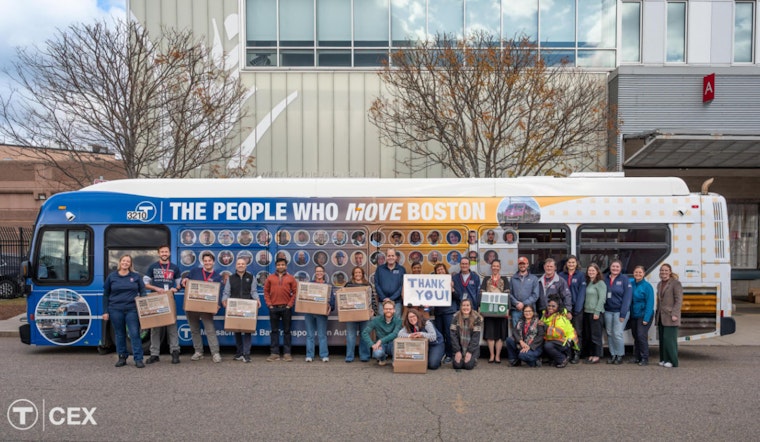
In a commendable act by the Massachusetts Bay Transportation Authority (MBTA), almost 3,800 pounds of food have been collected through an employee-led food drive to bolster The Greater Boston Food Bank (GBFB) and its associated organizations, as announced by the MBTA. This equates to roughly 3,165 meals that will soon be on the tables of those in need at the Salvation Army Cambridge Corp, a partner of GBFB.
The "The People Who Move Boston" bus, adorned with imagery of T workers symbolizing the vast MBTA team which facilitates daily transport for riders, served as the delivery vehicle for these charitable contributions. MBTA Chief Operating Officer Ryan Coholan highlighted the benevolence of the employees, stating, "This food drive represents the spirit of what we stand for as public servants," according to an official MBTA statement. He commended Jennifer Ross, System-wide Accessibility Deputy Director, for the initiative and the Customer and Employee Experience team for execution, and thanked the GBFB for their dedicated work in feeding families across Massachusetts.
The need for such acts of kindness is underscored by concerning statistics; the GBFB's 2024 Food Access Study, carried out in collaboration with Mass General Brigham, found that nearly two million adults in Massachusetts grappled with food insecurity, a testament to the importance of GBFB's role in New England as the largest hunger-relief organization. With a network stretching to 600 food distribution partners and programs, the GBFB's reach is extensive, providing an annual equivalent of 90 million meals across 190 towns.
Cheryl Schondek of GBFB noted the unexpected donation as "a wonderful and generous surprise," amid ongoing challenging times. "What a great example of how we can come together as a community to make sure that everyone has access to healthy food," Schondek said. according to the MBTA report. Seventeen locations within the MBTA's network, inclusive of facilities like Charlestown and Edison's Everett Main Repair, figured into the collection efforts.
MBTA's Ross, who has spent nearly a decade addressing the needs of riders with disabilities and older adults, shares a deep connection to the community and its diverse challenges. She proposed the food drive as a way of addressing the sense of helplessness felt by many in seeing neighbors struggle. Ross told the MBTA, "I realized the best way to regain that power is through a focused act of kindness," as noted by the MBTA. Her colleagues' immediate and enthusiastic response is a testimony to the MBTA's embodiment of public service and the shared commitment to uplifting others in the community.





