

























































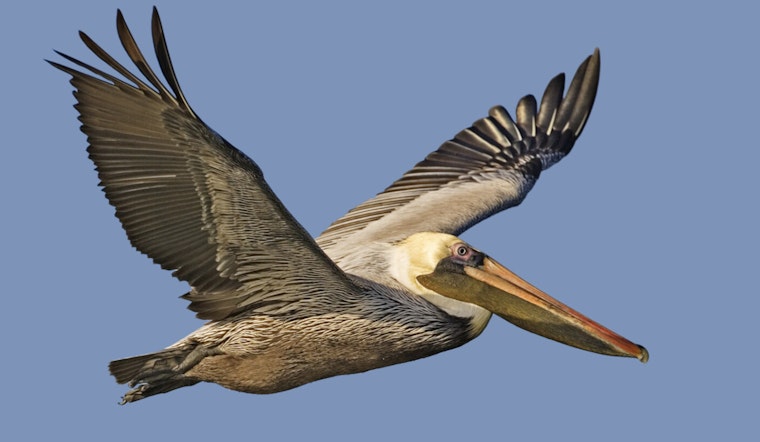
News from New York's bird-watching front has taken wing with recent sightings that have drawn both excitement and ecological interest. Brown pelicans, typically habitués of the southern United States, have been observed in unprecedented numbers at Jamaica Bay, New York City. Benjamin Forbes, a conservation specialist and photographer with the NYC Plover Project, was one of the first to document the group of at least 45 pelicans, stating to CBS News, "It's stunning to have them here." Their presence at this time of year is exceptional, suggesting the birds have not yet migrated south as expected.
These unusual avian visitations to New York are coupled with another ornithological event of note, where over a hundred bird enthusiasts descended upon a Long Island golf course following the first recorded sighting in the state of a rare common cuckoo. The find, by golfer Roy William Gardner, has astonished locals and experts alike. "I sent a cell phone photo of it to my nephew, who graduated from Cornell as an ornithologist…he told me to drop a pin in my exact location right away," Gardner recounted in a statement obtained by The New York Post. This sighting was the first for the common cuckoo in the lower 48 states since a sighting in Providence, RI, five years prior.
However, the delight in these sightings is tempered with ecological concerns. Experts see these northern shifts in wildlife as potential indicators of environmental changes. Rutgers University ecologist Jose Ramirez-Garofalo told CBS News, "Climate change is here and, unfortunately, climate change is here to stay." He pointed out that, while signs of cleaner water and healthier coastlines are positive, the displacement of native species by these migratory birds could become an issue.
As for the common cuckoo, it’s journey may have taken it far off its typical migratory path. Christopher Sayers, Roy William Gardner's nephew and a Ph.D. candidate studying bird biology at UCLA, speculated in an interview with the New York Post that "a slight variation in the heading that you take can put you someplace extremely wrong." The rarity of the event brought birders from far and wide, with some waiting hours for just a glimpse of the elusive cuckoo. This escapade demonstrates the unpredictable nature of bird migration and attracts critical attention to environmental factors that may influence these patterns.





