

























































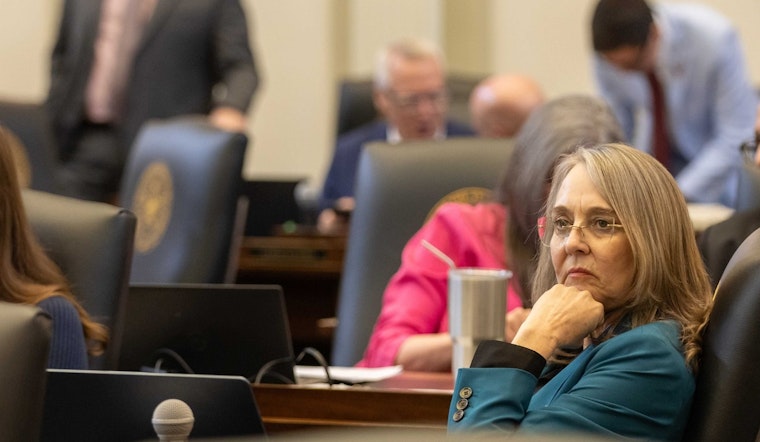
Rep. Molly Jenkins, R-Coyle, has sparked a conversation on government transparency and legislative ethics in Oklahoma after questioning the legality of a private decision made to increase state politicians' salaries. Jenkins has formally requested an opinion from Attorney General Gentner Drummond on whether the executive session held by the Oklahoma Legislative Compensation Board violated the state's Open Meeting Act. Her concern centers on the process the board used, rather than the pay raises themselves, which she believes was not conducted in a manner consistent with state law. "If the executive session was unlawful, the public deserves to know," Jenkins said, emphasizing the need for legislative clarity and accountability, according to a report by the Oklahoma House of Representatives.
Jenkins argues that Oklahoma law does not allow the board to meet privately to discuss raising lawmakers’ salaries because legislators are not employees of the board. After the board voted to increase pay for already well-compensated, part-time lawmakers, she proposed a constitutional amendment that would require voters to approve any future raises. She also questioned the timing of the decision, noting it came after changes in the board’s membership and after several meetings where no raises were approved. “At a time when Oklahoma taxpayers are struggling under soaring insurance premiums, rising property taxes and higher utility rates, the last thing they should be forced to do is pay more for their politicians, especially under such regrettable and suspicious circumstances,” Jenkins stated in the Oklahoma House of Representatives.
Jenkins plans to freeze legislative pay at its current level before recent raises and review salaries for other statewide officials. She stated that public service should prioritize duty over financial gain and announced she would donate her own raise to a district crisis pregnancy clinic. Jenkins’ actions highlight her stance on redirecting funds to public needs rather than increasing compensation for officials.
This legislative push aligns with an ongoing national debate over the compensation of elected officials, particularly how it reflects on their commitment to serving the public interest. If Jenkins' planned amendments gain traction, they would potentially set a precedent where voters directly influence the paychecks of their representatives. As the January 15 deadline to file bills and joint resolutions approaches, and with the Second Regular Session of the 60th Legislature convening on February 2, 2026, it remains to be seen whether Jenkins' efforts will crystallize into tangible legal reforms in Oklahoma's political landscape, as mentioned in the same news.




