

























































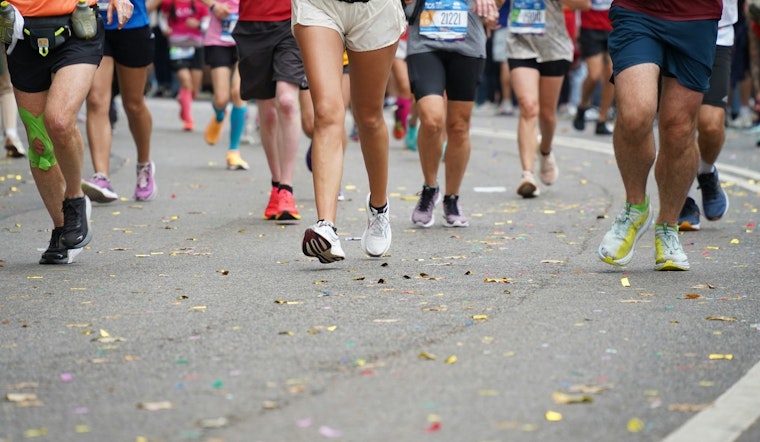
Marathon runners aiming to conquer 26.2 grueling miles are facing an increasingly prevalent obstacle that's not just about endurance or speed, but the rising mercury. A report from Climate Central has brought to light a stark reality – optimal temperatures for races are diminishing. According to ABC15 meteorologist Justin Hobbs, even seasonal marathons like the Mesa marathon are not immune to the impact of higher temperatures.
The struggle against the heat is not just limited to local events. A Climate Central study analyzed by CNN, points out that with 86% of the 221 races examined, including feted events like the New York City Marathon, will likely experience less than ideal conditions by 2045. Mhairi Maclennan, the Scottish distance runner expressed her concerns, "We’ve seen time and time again where athletes are passing out from dehydration and heat exhaustion during races and taking months to recover," in a statement she gave to CNN Sports, illustrating the severity of the problem.
The research pinpoints that while the Tokyo Marathon currently has a 69% chance of optimal race temperatures for elite men, in two decades the probability is predicted to fall to 57%. Similarly, for the Boston Marathon, conditions could deteriorate from 61% to 53% over the same time span. Elite female runners are not spared either, with a marked drop anticipated at five of the seven major marathons, including Berlin and Sydney, where chances decline by 10% and 11% respectively. The 2024 heat record-breaking year is a sober reminder of the changing climate's ramifications.
Elevated temperatures, especially those exceeding 68 degrees Fahrenheit as witnessed during the Tokyo and London Marathons, not only amplify physiological stress but also complicate hydration strategies. The 2025 Berlin Marathon provided a case in point, with organizers counseling participants to moderate their performance expectations due to unusually high temperatures. The advice, "shift your focus away from chasing records and instead soak up the unique atmosphere along the course," was part of the guidance given to runners on pacing and recovery. Such instances are increasingly challenging the traditional schedules and preparation for marathon events, with even suggestions for earlier start times to dodge the heat.
The implications stretch beyond the discomforts of hot-weather racing. Performance, spectacle, and sporting history itself stand compromised. As Maclennan lamented to CNN Sports, "That’s difficult because at the end of the day, sport is a business, and it generates revenue from spectators, and if spectators are there to see fast performances, and that’s not happening because of climate change, that’s an issue for the sector." Marathon records, once referenced as benchmarks of human potential, may now bear an asterisk marked by the climatic context in which they were achieved or the increasingly elusive conditions needed to challenge them.
Elite athletes like Maclennan must grapple with adapting training to fit these harsher climates, as much as marathons themselves may need to adjust their historical calendars. The looming 2028 Olympics in Los Angeles, too, presents an impending testbed of heat adaptation for competitors. With foretold increases in global temperatures, the days of cooler marathons are seemingly numbered, potentially rewriting the history of these storied footraces even as the starting pistol fires.





