

























































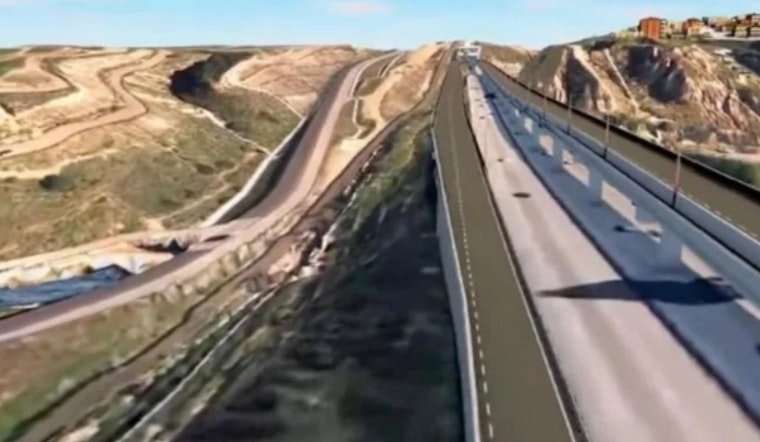
Tijuana's long-promised elevated viaduct is finally close to carrying cars, with officials now talking about a staged opening that starts as soon as December if the weather cooperates. The towering route is designed to reduce travel times between coastal neighborhoods and Tijuana International Airport, allowing drivers to bypass downtown traffic and the San Ysidro border crossing congestion. Even as the first stretch is prepared for use, crews will continue to install systems and finish columns along the remaining sections.
According to Fox 5 San Diego, the project is approximately 95 percent complete; however, many support columns throughout the downtown section are still incomplete, and a major tunnel, which has already been excavated, cannot be opened until it receives an industrial ventilation system. The outlet reports that workers are pouring higher-quality concrete, which slows the pace of construction, and that schedules have been stretched due to the relocation of underground utilities and the protection of natural water flow where the roadway crosses drainage channels. The work started roughly two years ago, and the expected price tag has now climbed past $1 billion.
"The first phase will be inaugurated in December depending on the weather," Baja California’s secretary of infrastructure and urban development, Arturo Espinoza Jaramillo, told Fox 5 San Diego. He said the state plans to convert some of the space beneath the elevated roadway into public areas while crews continue to work on ramps and connections. Officials are warning drivers that, with the staggered opening, they should expect active construction zones even on stretches where traffic is already flowing.
Why it's taking longer
Delays have been fueled in part by right-of-way and property disputes, as well as the challenge of threading a multilayered route through tightly packed neighborhoods, La Jornada Baja California reports. The president and project officials have openly acknowledged setbacks tied to clearing land and redesigning sections where homes, utilities, and drainage lines sit in the planned corridor, something that came up during a presidential morning briefing. Those hurdles, along with technical work such as installing deep foundations and outfitting the tunnel with specialized systems, mean that some portions will open to traffic well before the entire viaduct is completed.
What opens first
State and federal engineers say the first drivable stretch will move traffic from the coast toward central Tijuana and end just short of the downtown area, according to Sandiegored. Coverage from September indicated that the overall structure was approximately 92 percent complete, noting that changes to the original alignment had slightly reduced its total reach in a few locations. For motorists, those early sections are expected to shave minutes off trips to the airport and the beaches, although choke points will still crop up where the elevated lanes merge back into regular surface streets.
Legal and neighborhood hurdles
Residents, community groups, and cultural heritage advocates have taken the project to courtrooms and public hearings, demanding valuations, mitigation plans, and technical studies as part of ongoing negotiations and legal battles. Debates recorded by the Chamber of Deputies indicate that these legal and administrative steps have been incorporated into the construction calendar, resulting in slowed work in certain portions of the route. The mix of court challenges, negotiated relocations, and design changes has left engineers trying to maintain momentum while also limiting displacement and protecting drainage patterns and existing utility service.
When will it be done?
Local coverage has shifted the goalposts for full completion into next year, with one account from earlier in 2025 warning that the work could stretch into another year and that officials are now aiming for a late 2026 finish. That longer runway gives planners time to complete ventilation and drainage systems and to develop the public spaces beneath the viaduct. At the same time, crews wrap up the remaining columns, ramps, and connections. Cross-border travelers and daily commuters should prepare for rolling closures, detours, and phased openings as each segment comes online, and keep an eye on official notices from Mexican and U.S. border agencies as new routes to the crossings become available.




