

























































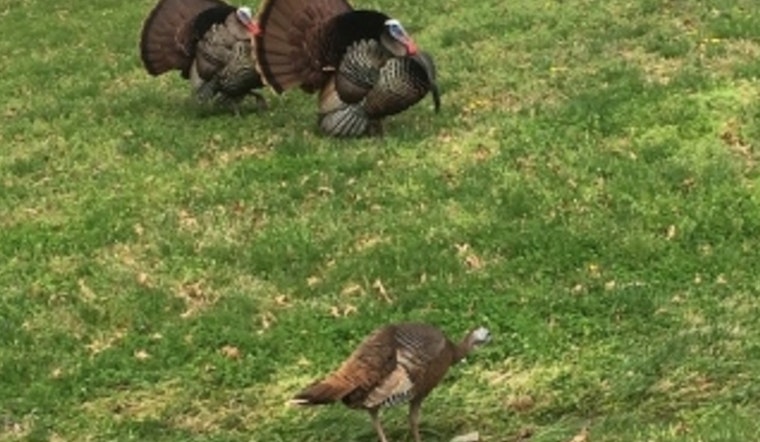
The Tennessee Wildlife Resources Agency has unveiled the findings from its 2025 Wild Turkey Summer Observational Survey, a cooperative venture that marshals the insights of the general public alongside those of TWRA staff to monitor wild turkey populations in the region. Participants contribute by reporting turkey sightings during a survey period stretching from June through August. The survey has been an annual initiative since the 1980s, but it only recently began incorporating public observations in 2022.
According to an article published by the TWRA, Roger Shields, the TWRA Wild Turkey Program Coordinator, oversaw this year's data compilation. He reported that despite early-season hindrance posed by wet weather, submissions were received from almost every county, with a notable total of 94 out of 95 chiming in. The TWRA based its data analysis on sightings collected from 92 of its own staff members and 459 public who participated in the program.
The survey statistical outcome yielded an index of 2.2 poults per hen (PPH), just shy of the 5-year average of 2.4 poults per hen. This PPH ratio informs on the wild turkey reproductive productivity by contrasting the count of young turkeys, known as poults, observed against the number of hen turkeys noted. According to the survey, modest turkey production levels are pegged at around 2.5 PPH. Variability was seen across different turkey management units in the state, with productivity index measures spanning from 1.5 to 2.1 PPH, though the northeast unit scored slightly higher with a 2.6 PPH index, likely aided by a concurrent cicada hatch that furnished a plentiful food source for the hatching poults.
"Results of the annual survey feed directly into our new adaptive harvest management process, which helps us determine the optimal management decisions for meeting our objectives for wild turkeys, "Shields said, underpinning the critical role these findings play in the stewardship of the species. The survey’s fundamentals enable TWRA to adjust its strategies in alignment with the reproductive trends. Gratitude was expressed toward those who dedicated their efforts to the survey, underscoring the value of such collective engagement.
The TWRA also extends an invitation to the wider public to delve into the full wild turkey status reports and summaries from previous years. Interested parties can enrich their understanding by visiting the Wild Turkey Hunting section on the TWRA's website. The exhaustive aim is to balance fish and wildlife conservation with the sustenance of public safety through law enforcement and safety education, particularly on waterways—qualities that make the very fabric of Tennessee's rich natural heritage.





