

























































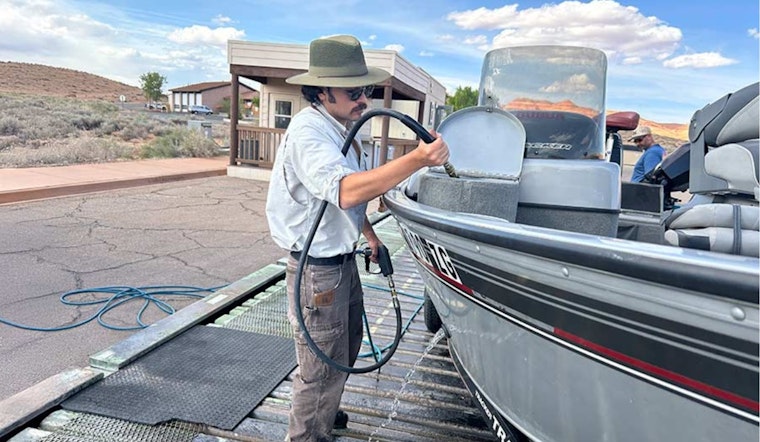
The war against aquatic hitchhikers in Utah has been relentless throughout 2025. Records show that over 288,000 boats were inspected this boating season to combat the spread of quagga mussels, so says the Utah Division of Wildlife Resources and the Utah Department of Natural Resources. The joint effort also included partners such as the Arizona Game and Fish Department and the National Park Service. This tireless initiative underscores the state's commitment to preserving the integrity of its waterways from invasive species like the quagga mussels and Eurasian watermilfoil, unwelcome visitors carried in from infested reservoirs such as Lake Powell.
Despite a slight dip in inspections from the previous year, the battle saw an uptick in actual decontaminations, according to a report by the Utah Division of Wildlife Resources. The figures from the front lines: 288,554 boat inspections, and 6,509 decontaminations, and within those numbers, the Lake Powell area accounted for 51,337 and 1,886, respectively. The Utah Lake State Park's decontamination station, installed only in May of 2023, lead the charge with a bulk 965 cleanses.
"The dip tanks continue to be invaluable in improving efficiency for our decontaminations of complex boats," was the sentiment expressed by Lt. Bruce Johnson of the Utah DNR Law Enforcement Aquatic Invasive Species Statewide Operations. These tools have clearly been key in what seems like an ongoing siege upon water-borne nuisances. However, the DNR officers also had their hands full with a variety of aquatic invasive species violations, including boaters who skimped on mandatory education courses, didn't shell out for the vessel-enrollment fee, or bypassed mandatory inspection stations, not to mention those who forgot to remove their drain plugs while transporting their watercraft.
While the boating season hunkers down, Lt. Johnson commends the "overall" compliance by Utah's boaters, noted in a statement by the Utah Division of Wildlife Resources. He emphasizes the importance of adhering to regulations: "make sure to plan ahead for next year and be sure to take the mandatory education course, pay the required fees, and display the necessary decals on your watercraft, so you can be ready for another great boating season next year." The upcoming winter months extend the required dry time for decontamination to 30 days, and those with the more complex wakeboard boats will always face that month-long wait, unless they proceed with an approved decontamination protocol.
Lastly, the significance of these efforts is underscored by the negative impacts that quagga mussels have on local ecosystems and human infrastructure — plugging water lines, skyrocketing removal costs, and leaving behind a smelly graveyard of sharp shells along beaches. Not to be outdone, Eurasian watermilfoil matches its mussel counterparts in destructiveness by forming dense mats that block sunlight, disrupt native species, and wreak havoc on irrigation and boat propellers. More information and boater requirements can be found on the "STD of the Sea" website. As Utah wraps up another season on the waters, the state's defenders of the deep blue press on, keeping vigilant watch against these pesky invaders.





