

























































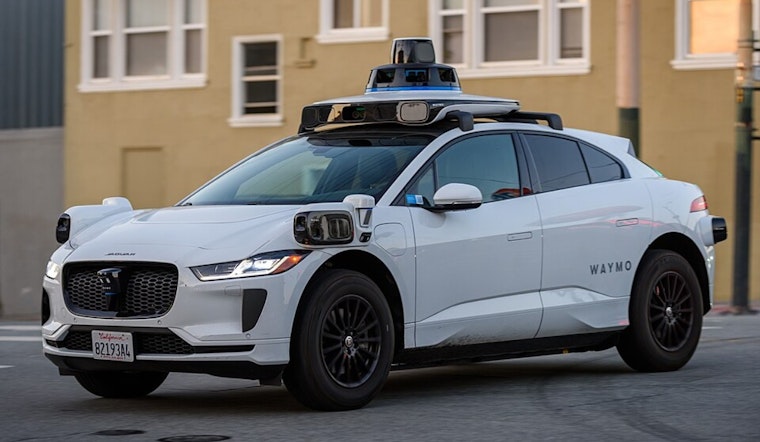
Waymo’s driverless taxis just merged into the fast lane. Today, the company quietly started sending robotaxis onto freeways across San Francisco, Los Angeles, and Phoenix, promising commute times cut by as much as half for some routes. The freeway feature rolls out first to a limited set of early users, alongside a Bay Area expansion that now stretches down to San José and includes curbside pickup at the regional airport.
Company brass pitched the move as a deliberate, carefully earned step toward true autonomy. “Freeway driving is one of those things that’s very easy to learn, but very hard to master when we’re talking about full autonomy without a human driver as a backup, and at scale,” Waymo co‑CEO Dmitri Dolgov told reporters, per TechCrunch. Waymo says highway trips for paying riders come after months of employee testing, as well as closed-course trials and extensive simulation.
The Bay Area expansion creates one unified service zone of roughly 260 square miles, and Waymo will begin curbside pick‑ups and drop‑offs at San José Mineta International Airport. The company already offers curbside at Phoenix Sky Harbor. Reuters adds that freeway rides will initially be available to early-access users and will be provided when a highway route is significantly faster.
Hoodline previously tracked the local build‑up for SJC access; that included phased testing and close coordination with airport staff ahead of public ops.
Which roads are included
Don’t expect every highway to go live at once. Early runs stick to specific stretches. WIRED reports Bay Area trips will use parts of US‑101, I‑280, and I‑80 (among others), while Los Angeles and Phoenix get select segments of I‑10, I‑405, and several state routes.
How the rides will work
Riders can flag a preference for freeway routes in the Waymo app. When the system finds a notably quicker highway path, it may match you with a freeway‑capable vehicle. As noted by TechCrunch, the feature launches through the early-access and Trusted Tester programs before expanding to more customers.
Safety and local coordination
Waymo says it has updated its protocols and coordinated with highway patrols and first responders to prepare for high-speed incidents. Reuters also highlights the company’s redundant onboard systems and extensive simulation to handle rare freeway emergencies.
What riders can expect
Early demos show the time savings aren’t just theoretical. In one test, a Business Insider ride that would’ve taken 27 minutes on city streets was completed in roughly 10 minutes via the 101. Business Insider adds that riders can preview routes in the app to see if a trip will hop on the freeway, with more highway access slated to roll out over time.





