

























































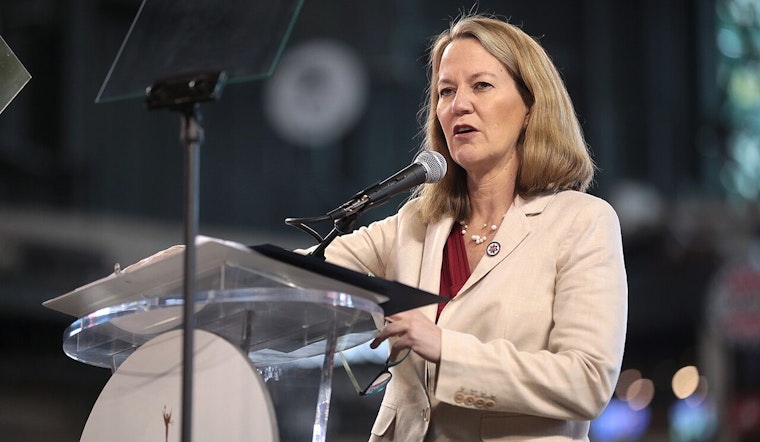
In an escalating confrontation with lasting implications for consumer rights, Attorney General Mayes has banded together with a formidable coalition of attorneys general to file a lawsuit opposing the Trump administration's attempt to strip the Consumer Financial Protection Bureau (CFPB) of its financial lifeblood—and prevent the almost certain cash drought come January 2026, according to a statement obtained by the Arizona Attorney General's office.
Russell Vought, the CFPB's acting director, has chosen the controversial course of action of not requesting any funding from the Federal Reserve, which traditionally bankrolls the agency, this choice endangers the CFPB's operations and could leave it incapacitated next year; the attorneys general warn that consumers then will find themselves undefended against financial malfeasance such as fraud, predatory lending, and other damaging monetary schemes, the CFPB being an institution that has thus far played a pivotal role in safeguarding against such threats over its 14-year history, having redistributed $21 billion back to the pockets of 205 million Americans, as reported by the Arizona Attorney General's office.
In response to Vought's assertion that the Federal Reserve's "profits" are non-existent and thus cannot fund the CFPB, the coalition refutes this claim as both an unlawful and unconstitutional action that neglects the CFPB's mandate to operate on such funds; Attorney General Mayes described the bureau as one of the "most effective tools we have to hold big banks and financial institutions accountable," highlighting its significance in reining in unfair practices that exploit consumers, according to a statement obtained by the Arizona Attorney General's office.
The legal action also brings to light the bureau's obligation not merely to protect consumers at a national scale, it also includes the duty to process and share complaint data with the states a task it cannot perform if defunded; states depend on this information flow for initiating inquiries, demanding reimbursements, and taking financial institutions to task through litigation, Mayes along with his colleagues argues that without these fundamental functions, safeguarding American consumers becomes an untenable mission. The CFPB, beyond its custodial role, stands as the sole federal agency tasked with supervising whether the nation’s largest banking entities adhere to consumer financial laws, as reported by the Arizona Attorney General's office.
Joining forces in this legal battle are the attorneys general from across the nation, including those from California, Colorado, Connecticut, and not limited to New York and North Carolina; together they move to secure a court order that would compel the CFPB to demand the necessary funds from the Federal Reserve, enabling it to carry out its legislative duties and carry on with its crucial mission of consumer protection, according to the coalition led by Attorney General Mayes.




.jpg)