

























































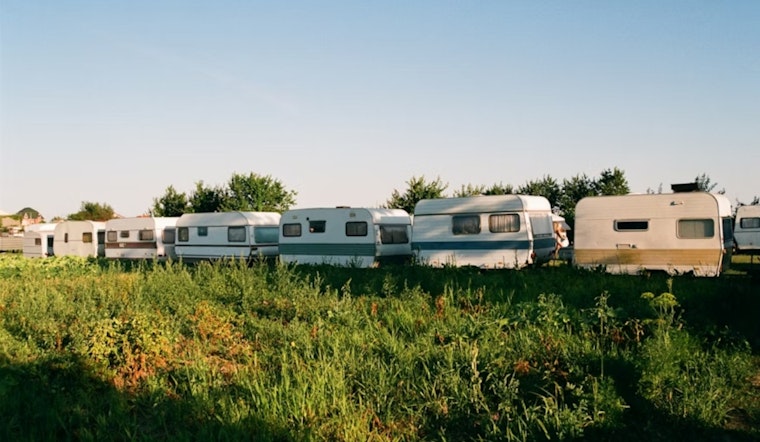
Four RV residents living in San Francisco’s Bayview say a man in a city homeless-outreach jacket charged them hundreds of dollars in cash for what turned out to be bogus parking permits. Jesus and Kathia say they handed over $250 for a blue sticker they believed would protect their RV from towing, only to watch the decal scratch off and crews later try to haul their home away during a sweep.
Residents' accounts
Jesus, Kathia and two other RV residents told reporters they recognized the bearded, Latino man as someone they had seen working at a shelter where they previously stayed. They say he wore a Hot Team jacket and offered temporary stickers for prices ranging from $250 to $500 in cash. According to the couple, they bargained the price down to $250, then later texted the seller demanding a refund after the sticker failed to hold up.
Their messages showed as "read," they say, but no refund ever arrived. The sticker they described was a roughly 3-by-3-inch blue decal that eventually peeled away and left only sticky residue behind. Kathia, who is expecting a child in two weeks, says the ordeal has thrown the family into crisis at the worst possible time. The residents shared their accounts with Mission Local.
How the permit program is supposed to work
On paper, the system looks a lot different from what these residents describe. The city’s Large Vehicle Refuge Permit program is designed to give eligible RV dwellers a visible sticker that allows them to stay longer than San Francisco’s new two-hour parking limit while they engage with services. According to the City and County of San Francisco, permits are issued by Street Team outreach staff and can last for up to six months.
The two-hour limit itself came out of an ordinance signed by Mayor Daniel Lurie earlier this summer. Enforcement started in November, when officials began towing RVs that did not have valid permits as the policy rolled out. Coverage has highlighted both the city’s stated goals for the program and concerns from advocates about verification hurdles and limited housing capacity. The SF Chronicle has reported on the legislation and its implementation.
Tows and the investigation
Things came to a head when tow operators and San Francisco police officers moved in during a mass sweep, residents said. Crews reportedly tried to seize Kathia’s RV and at least three other RVs were towed from the area. For a family that thought they had bought protection from exactly this scenario, it was a harsh reality check.
Investigators from the city attorney’s office later interviewed Jesus and Kathia in Spanish. In a statement to Mission Local, Department of Homelessness and Supportive Housing Deputy Director Emily Cohen said the situation is "being investigated" and that officials intend to audit permits to confirm they are legitimate.
Jesus says the man who sold them the sticker first claimed he lived in Antioch, then told them he did not have the money to pay them back and eventually stopped responding. Reporters noted that the couple’s messages continued to appear as "read" without any further reply.
Possible legal exposure
Under the guidelines for the Large Vehicle Refuge Permit program, the city can revoke a permit if a holder provided false information, stopped participating in services or transferred the permit to someone else. Those are the rules spelled out in the program materials published by the city.
If investigators confirm that someone sold or falsified what appeared to be official permits, that conduct could trigger administrative penalties and potentially a criminal investigation under state or local fraud laws. For anyone who thought this was just a side hustle, the policy documents suggest otherwise.
Why this matters
The permit system was supposed to provide a bit of stability for people living in vehicles while they worked with case managers. Advocates have warned, however, that the rollout could still leave hundreds of residents facing displacement even with the program in place.
National and local reporting has placed the number of vehicles being used as homes in San Francisco in the several-hundred range, underscoring how many people depend on enforcement decisions and access to legitimate permits. Scams like the one alleged here hit especially hard in that context. AP News and other outlets have documented the broader policy landscape.
For now, the residents say they are balancing a useless sticker, stepped-up towing and an ongoing inquiry from city investigators. The investigation remains active, and officials say they will continue auditing permits as they probe the allegations.




