

























































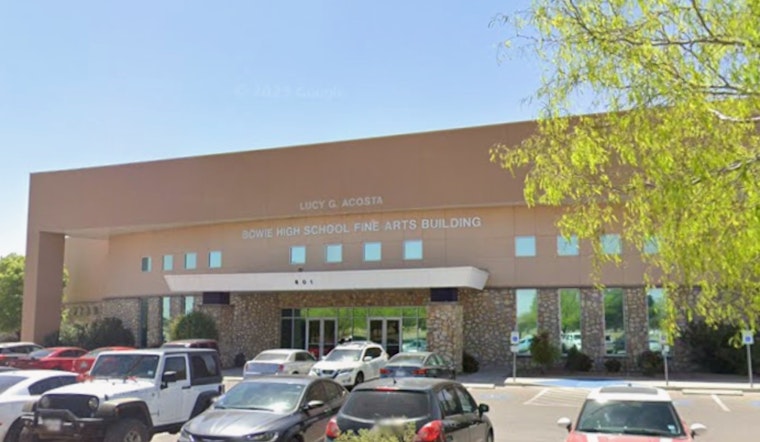
For students and families at Bowie High School in El Paso, an old courtroom victory that once felt like armor is starting to feel more like thin glass. A landmark 1992 lawsuit that reined in Border Patrol tactics around the campus is now colliding with a fresh policy shift in Washington and a recent Supreme Court order, and the combination has locals worrying that the protections they fought for are slipping away.
The 1992 case that shaped protections
Back in 1992, Bowie students, a coach, and school staff filed a class action against the Border Patrol after years of stops, searches, and detentions in the blocks surrounding the school. In Murillo v. Musegades, a federal judge certified the class and issued injunctive relief that told agents they needed reasonable suspicion and could not rely solely on a person’s race or appearance when deciding whom to stop. Case records show the lawsuit produced a preliminary injunction and pushed the agency to adopt training and other measures for agents. According to the Civil Rights Litigation Clearinghouse, the suit was filed to halt what plaintiffs described as unconstitutional stops and searches around Bowie’s campus.
In El Paso, that ruling is still remembered as a turning point that helped seed the broader practice of limiting immigration enforcement at so-called sensitive locations, including schools. Advocates say the Bowie case was not just about legal doctrine; it was about giving students enough breathing room to walk to class in a border city where daily life and federal enforcement can feel uncomfortably intertwined.
Bowie memories and local fear
Former students and staff who testified in the 1990s recounted a tense routine outside the school: Border Patrol trucks pulling up to curbs, agents rifling through backpacks and questioning employees in front of students. Those encounters and threats have stuck with them for decades. Ernesto Muñoz, one of the students involved in the original case, told reporters that he and his family now take extra precautions, including carrying passports, because they fear being profiled. His experience, along with similar accounts from other alumni, has been detailed in recent coverage of how the Bowie case still echoes today, as reported by Texas Public Radio.
Policy reversal in Washington
On January 20, 2025, the Department of Homeland Security issued a directive that revoked earlier guidance shielding so-called protected or sensitive locations, including schools, houses of worship, and hospitals. Instead, the department told agents to lean on enforcement discretion and “common sense.” In a statement that month, DHS declared, “Criminals will no longer be able to hide in America's schools and churches to avoid arrest,” language widely read as a sharp break from long-standing practice. The shift was announced by DHS and covered by national outlets, including Reuters.
Supreme Court stay and its aftermath
Over the summer and into the fall, lower federal courts in California imposed limits on certain roving immigration stops. In September, the Supreme Court stepped in and granted emergency relief, staying a district court order that had barred stops based solely on apparent race, language, occupation, or place. The unsigned stay drew a pointed dissent from Justice Sonia Sotomayor, who wrote, “We should not have to live in a country where the Government can seize anyone who looks Latino, speaks Spanish, and appears to work a low wage job,” according to the Court’s published materials. The order is an interim measure while the underlying litigation continues in the lower courts, as documented by the Legal Information Institute.
Legal implications
Taken together, the DHS directive and the Supreme Court’s stay have narrowed the real-world protection that communities believed they had after the Bowie litigation, according to legal observers. The moves have also triggered a wave of new lawsuits and advocacy efforts. Several organizations and religious institutions have sued to block DHS’s rollback of protected-areas guidance, arguing that the change runs afoul of administrative law and religious-freedom guarantees. In those cases, plaintiffs have brought claims under the Administrative Procedure Act and, in some complaints, the Religious Freedom Restoration Act, as tracked by Bloomberg Law and Public Counsel.
What it means for El Paso
Bowie High sprawls across roughly 60 acres, less than a mile from the U.S.-Mexico border, in a city that is more than 80 percent Mexican American. For many residents, the recent legal shifts have stirred up old worries about what can happen on a simple walk down the street. Former plaintiffs and alumni say the 1992 ruling created a sense of safety around the school that now feels tenuous under the new federal posture, a concern that has surfaced repeatedly in local interviews. “Even though I am an American citizen . . . I carry my passport with me everywhere I go,” one former student told Texas Public Radio.
In response, advocates and school leaders are urging campuses and community groups to update response plans, expand know-your-rights trainings, and coordinate closely with legal-aid providers as the court battles unfold. National education and legal organizations have circulated guidance recommending that institutions review how they interact with federal officers and prepare counselors, staff, and parents for the possibility of immigration enforcement activity near schools, according to NAFSA.




