

























































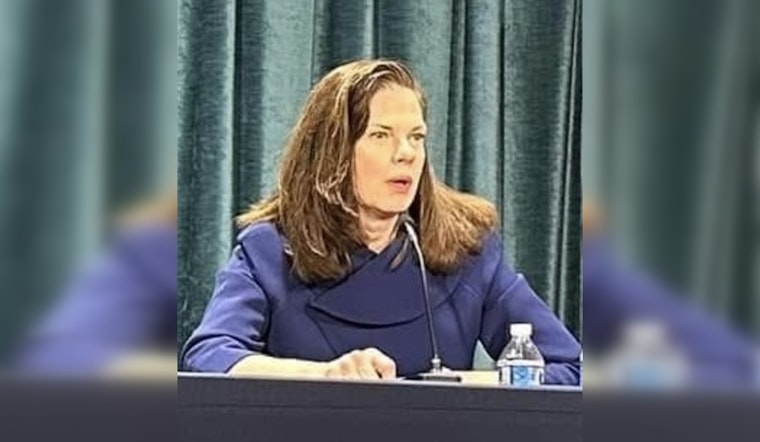
Cook County State’s Attorney Eileen O’Neill Burke is rolling out a tightly focused new experiment on Chicago’s West Side that would let some teenage boys swap pretrial detention for school-based support and counseling while their cases move through court. Set to start in early 2026, the pilot targets 13- to 17-year-olds who live in Lawndale and Little Village. Officials are pitching it as a short-term, court-monitored test that keeps teens in class and plugged into services instead of sitting in custody, with county leaders stressing that the effort will stay small and be closely watched by judges.
According to county records, the Justice Advisory Council has signed off on roughly $955,843 for a Juvenile Detention Alternative pilot. That money will allow the State’s Attorney’s Office to steer eligible youths to community providers rather than seek pretrial detention, as detailed in the Cook County legislative file. The agreement designates the JAC as a fiscal partner and says the funds will be spent in FY26 under a deal that runs through Sept. 1, 2026. The county file also notes that referrals could come out of the 10th Police District, which covers parts of the West Side.
What the pilot will provide
Prosecutors say the pilot is limited to boys ages 13 to 17 who live in Lawndale and Little Village, and they will have to stay enrolled in school to participate. Youths in the program are expected to receive about 20 hours of wraparound after-school services, including cognitive behavioral therapy, tutoring, mentoring, and family engagement, all aimed at treating trauma that has gone unaddressed and lowering the odds of another arrest. Yvette Loizon, the State’s Attorney’s chief of policy, told reporters the goal is to give young people “structure and activities” so they do not return to the street, a description reported by the Chicago Sun‑Times.
Local partners and program sites
The State’s Attorney’s Office plans to lean on existing neighborhood institutions to carry out the day-to-day work. New Life Centers will run programming for Little Village teens, and The Firehouse Community Arts Center will handle services for Lawndale youth, according to the organizations’ websites. Both groups already operate after-school, outreach, and trauma-informed initiatives that mirror the pilot’s mix of mentoring, arts programming and mediation. County documents state that JAC dollars will flow to these community-based providers under contracts with the prosecutor’s office.
Who qualifies — and the legal setup
The eligibility rules are intentionally tight. Prosecutors say the option will not be available to teens charged with murder, attempted murder, criminal sexual assault, aggravated battery with a firearm, or to youths who are already on electronic monitoring. The pilot is not a diversion program in the traditional sense, since participants still face their original charges while enrolled, and their cases stay on the juvenile court docket. The State’s Attorney’s Office has said that cases in the pilot will be heard and monitored by a judge, and the court’s public roster shows that Judge Beatriz Frausto‑Sandoval serves in the Juvenile Justice Division and will oversee those calendars, according to the Circuit Court of Cook County.
Why prosecutors pitched the experiment
Burke’s team is framing the pilot as an attempt to interrupt what can happen after a young person has been detained. Long-term research has found that youth coming out of juvenile detention face sharply higher risks of being shot or killed. A Northwestern University study published in JAMA Network Open reported that juveniles involved with the justice system, particularly Black and Hispanic males in the cohort examined, experienced far higher rates of firearm injury and death over time, which has helped fuel calls for community-based alternatives.
What to watch next
The county agreement schedules spending for FY26 and runs through Sept. 1, 2026, which makes early 2026 the key window to watch for a formal launch, according to the Cook County legislative record. Observers will be looking at how many teens enroll, how consistently they attend school, what kinds of services actually get delivered, and whether participation appears to influence later charges or sentencing decisions. Prosecutors say that if the data show a drop in reoffending, the results could help shape future policy. At the same time, advocates and defense attorneys are expected to press for clear information on how referrals are made and how outcomes are tracked, while the neighborhood groups running the pilot will be judged on whether they can deliver steady, trauma-informed support at scale.





