

























































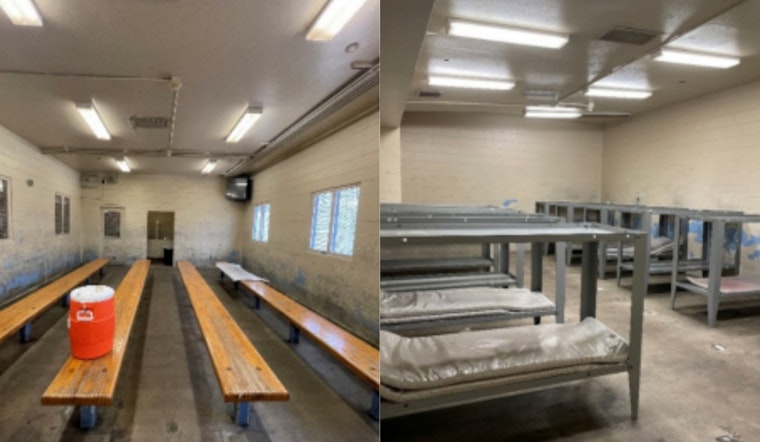
A surprise round of federal inspections last summer pulled back the curtain on what watchdogs say were filthy holding cells, sloppy handling of people’s belongings and repeated delays that kept migrants in custody longer than policy allows at four San Diego area immigration facilities. The spotlight fell on the Chula Vista Border Patrol station, a temporary Otay Mesa processing site and holding rooms at the San Ysidro port of entry.
What the watchdog found
According to a report by the Department of Homeland Security’s Office of Inspector General, unannounced visits in August 2024 to four short-term Customs and Border Protection holding facilities turned up sanitation problems, gaps in how detainees’ valuables were logged and delays getting people the U.S.-equivalent versions of their medications. DHS Office of Inspector General says those audits produced four formal recommendations meant to close those gaps. The report includes photographs along with a point-by-point rundown of where standards were not met.
Voices from people who were held
Local immigration lawyers and people who spent time in the holding rooms say the official findings line up with what they hear every week from clients. “If you had shown me those pictures with no context, I would've thought I was in a third-world country,” said Tracy Crowley, managing attorney at the Immigrant Defenders Law Center. Detainees interviewed by reporters described cold, dirty cells and thin sleeping arrangements, including one Canadian national who said he spent a week in a border cell followed by 12 days in ICE custody, and another man who reported spending two days at the San Ysidro port before being deported. As reported by ABC 10News, those accounts appear alongside the inspector general’s photos and findings.
Property, medication and time in custody
The inspector general’s report shows cash stored in safes without documentation and other valuables stacked in open-air cages, and notes allegations that money disappeared from a detainee’s backpack. Investigators also flagged problems getting equivalent prescription medications into detainees’ hands in a timely way. At the temporary Otay Mesa processing site, inspectors found that more than half of the detainees were held longer than three days, which runs against the stated short-term purpose of CBP holding rooms.
Legal and policy context
CBP's National Standards on Transport, Escort, Detention, and Search, known as TEDS, state that detainees “should generally not be held for longer than 72 hours” and set basic expectations for cleanliness, medical care and handling of personal property. As outlined in CBP, holding rooms are supposed to be short-term processing spaces, not de facto detention centers. The inspector general’s recommendations, which cover property controls, medical oversight and completion of antimicrobial coatings at the Chula Vista station, are aimed at bringing daily practice in line with that framework.
What comes next
The inspector general left four recommendations open for CBP to resolve, focused on how property is handled, how prescriptions are managed and how facilities are cleaned, and again urged the agency to finish the antimicrobial coating project at Chula Vista. Advocates say the photos and interviews underscore why tougher oversight matters both for people’s asylum cases and for public health, while local reporters noted that CBP did not provide a substantive response to requests for comment. Federal officials now have a clear punch list of fixes to work through, and how quickly CBP moves on it will determine whether the watchdog’s concerns turn into actual changes on the ground.



