

























































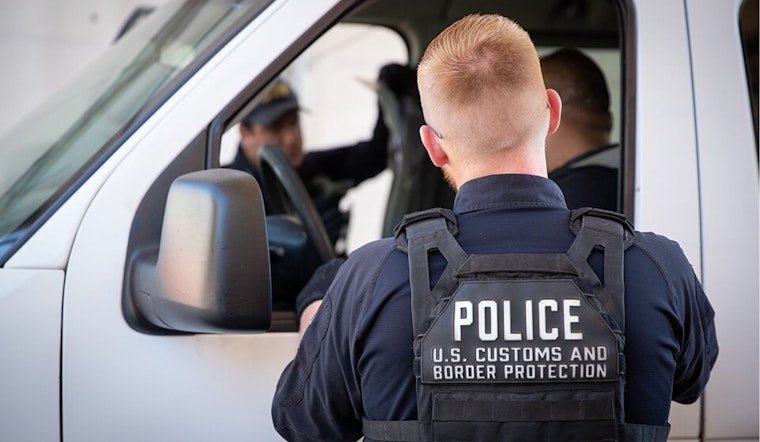
Federal immigration agents have been busy up and down Southern California’s freight corridors, hauling in 87 commercial truck drivers in a recent series of coordinated enforcement sweeps. The operations, led by U.S. Border Patrol and Homeland Security Investigations, zeroed in on drivers who held commercial driver’s licenses while already on the federal immigration radar.
According to the Sacramento Bee, the push unfolded in two main waves. On Nov. 23, the El Centro Border Patrol sector ran checkpoints near Indio along Highways 86 and 111, detaining 42 commercial drivers. Then on Dec. 10, an ICE Homeland Security Investigations operation nicknamed "Highway Sentinel" added 45 more arrests in and around Ontario and Fontana.
Of the 42 drivers picked up in the Indio-area sweep, 30 were from India and two were from El Salvador, the Bee reported. Thirty-one carried California-issued commercial licenses, while others had CDLs from states including Florida, Illinois and New York. Federal officials have framed the actions as part of a broader interior enforcement strategy that leans on highway checkpoints and joint agency operations.
How the raids land in a statewide showdown
The timing is not accidental. The sweeps arrive in the middle of a standoff between California and federal regulators over commercial licenses held by noncitizens. In November, state officials moved to cancel about 17,000 CDLs after identifying licenses with expiration dates that stretched past drivers’ authorized periods of stay in the country. Federal regulators have argued the review was necessary for safety and regulatory compliance. That step, and the audit behind it, has pulled fresh federal scrutiny onto how states confirm immigration status and work authorization before issuing commercial licenses, with the AP News noting threats of funding penalties and tighter rules that could further limit which noncitizens are eligible for CDLs.
Federal officials and Newsom’s office trade shots
On the political front, the rhetoric has gotten nearly as heated as the enforcement. Transportation Secretary Sean Duffy has blasted California’s licensing approach, insisting the state must explain licenses he characterizes as improperly issued. Gov. Gavin Newsom’s office has pushed back, calling that description misleading and defending many of the affected drivers’ federal work authorizations.
The dispute is not just about talking points. Earlier this fall, the federal Department of Transportation moved to hold back tens of millions of dollars in grants while the two sides worked through compliance demands, a high-stakes tug-of-war over money that underpins major transportation projects and enforcement programs. Reporting in the Los Angeles Times lays out how both sides are positioning themselves and what that could mean for California’s transportation funding.
Truckers, small fleets and an already tight labor market
Out on the road and in truck yards, the concern is more immediate: jobs, routes and payroll. Trucking industry groups and immigrant-rights advocates warn that large-scale enforcement operations and mass license cancellations could squeeze an already thin driver pipeline, leaving owner-operators and small carriers scrambling to keep loads moving.
Community reporting has captured mounting anxiety among immigrant truckers, especially Punjabi drivers based in Central Valley freight hubs, who say the crackdown has hit fast and hard. Local and industry outlets note that carriers and smaller fleets could face sudden operational and financial trouble if drivers are pulled from service or find themselves stuck in immigration or DMV limbo, as highlighted by coverage from KPBS.
What happens to the drivers now
Federal officials have described the recent arrests as immigration enforcement actions that can funnel drivers into ICE custody or removal proceedings rather than into criminal courtrooms, according to a Border Patrol statement cited by the Sacramento Bee. Leadership in the El Centro Sector has also said that interior arrests have recently surpassed arrests at the border itself, which they attribute to stepped-up interior checks and more frequent interagency operations.
For the moment, authorities say these highway sweeps are aimed at truckers who lack proper authorization or pose safety concerns on the road. State officials counter that many of the impacted drivers actually hold valid federal work permits and that the DMV’s moves are intended to surgically fix technical mismatches in license records, not wipe out livelihoods wholesale.
Where that line ultimately gets drawn is likely to be hammered out in administrative hearings, back-and-forth agency letters and, potentially, more enforcement actions as federal regulators keep pressing California on compliance, a process described in ongoing coverage by the AP News.





