

























































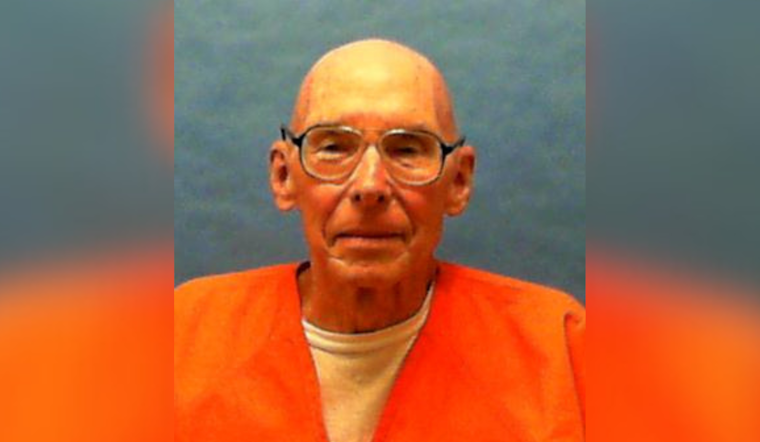
An 80-year-old Florida man may find a glimmer of hope in the justice system after nearly half a century on death row for a quadruple murder he insists he didn't commit. Tommy Zeigler, whose fate has been anchored to that solemn title of Florida's longest-serving death row inmate, witnessed in a recent hearing as evidence that could potentially dismantle the foundation of his 1976 conviction was laid out in the Orange County courthouse. As reported by WFTV, Zeigler, dependent on an oxygen tank to breathe and largely silent throughout proceedings, watched as experts discussed new DNA testing tied to the case.
The hearings are the result of Zeigler's attorneys advocating to possibly overwrite what has been a narrative of guilt with one of innocence – or at least, to convincingly start to question the verdict that has confined him to death row. "The newly discovered evidence presented this week dramatically undermines the evidence presented to the jury and would have certainly created reasonable doubt," one of Zeigler's attorneys pointed out in an interview with WFTV. The defense has proposed that the blood patterns on Zeigler's clothing do not match what one would expect if he had been the shooter, suggesting that the real scenario of the crime might have unfolded vastly differently than the prosecution argued in 1976.
Despite these assertions, the state remains skeptical, dismissing the defense's theory as inconsistent with the narrative Zeigler himself provided during his original trial. Assistant Attorney General Joshua Schow criticized the defense's approach, stating to WFTV, "If they're going to go with this theory that Mr. Zeigler was shot and beat, they're going to have to explain to the jury why Zeigler told the wrong story at trial." The state also contends that the newly presented blood spatter theory disregards other forensic clues from the murder scene.
As the legal teams prepare their written summaries for the judge's consideration, the possibility of a new trial hinges not on proving Zeigler's innocence but on whether the evidence could have swayed the original trial's outcome. This fine legal distinction, emphasized by Zeigler's defense and mentioned in a report by FOX 35 Orlando, bears the weight of a man's life. In that vein, Connie Crawford, Zeigler's cousin, was quoted as saying, "If you lose hope, you've lost it all," illustrating the stark human emotion intertwined with the often cold mechanics of legal process.
A decision is anticipated to be made by early March. Until then, Zeigler, his family, and the interested public must continue to wait, to watch, and to consider the harsh timelines of justice. Dennis Tracey, Zeigler's defense attorney, mentioned in the aforementioned FOX 35 Orlando article, argues that a fair trial, this time based on "true evidence," is what redemption in the eyes of the law would look like for his client.





