

























































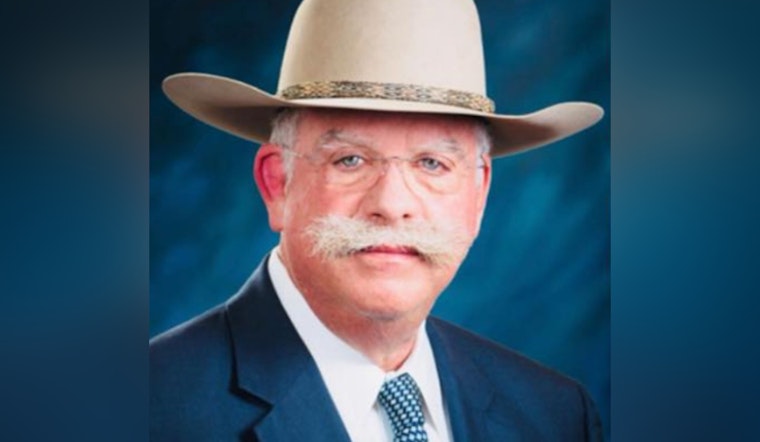
On a windswept stretch of Goliad County, fifth-generation rancher T. Michael O'Connor has effectively hung a permanent "no development" sign on his land. He has placed a forever conservation easement on roughly 6,410 acres of coastal prairie, locking out subdivision and development while keeping the property as a private working cattle ranch. The deal preserves one of Texas's last intact runs of coastal tallgrass and was purchased for just under $8.9 million, with long-term stewardship handled by a nonprofit partner.
In an official release, the Texas Commission on Environmental Quality said the easement covers approximately 6,410 acres and costs $8.863 million, with $7.6 million coming from a RESTORE Council grant the agency administers. The RESTORE funds stem from civil penalties tied to the 2010 Deepwater Horizon oil spill and are designed to support ecological restoration and coastal resilience. TCEQ described the O'Connor easement as the first conservation easement ever approved by the RESTORE Council and the largest land-protection project in the Gulf funded under the RESTORE Act.
The Nature Conservancy says it holds the easement and helped cover the remaining cost with support from private donors, including the Knobloch Family Foundation, Frank Klein, and H‑E‑B. As outlined by The Nature Conservancy, the organization will monitor the property, enforce the easement's terms if needed, and still allow the O'Connor family to keep ranching. Jeff Francell of the group called the purchase "a huge milestone" for Gulf Coast prairie conservation.
O'Connor, who serves as U.S. marshal for the Southern District of Texas and previously was Victoria County sheriff, told local reporters that conserving the prairie felt like "a win-win" and that the family wanted the land to remain a ranch. As reported by the San Antonio Express-News, he plans to fix up cabins and other buildings to house students and researchers and will work with Texas A&M's Center for Grazinglands and Ranch Management on monitoring. O'Connor said the easement is the start of a longer effort to keep the prairie intact for future generations.
Why the Prairie Matters
Coastal prairies once stretched for millions of acres along the Gulf Coast, but now survive mostly as fragmented remnants that still support hundreds of plant and animal species. The endangered Attwater's prairie-chicken depends on these grasslands, according to the U.S. Fish and Wildlife Service. The eastern black rail has also been listed as threatened, the U.S. Fish and Wildlife Service notes, underscoring how critical intact prairie is for wildlife. Conservation groups say protecting large, connected parcels helps with flood buffering, water filtration, and carbon storage, turning working ranches into quiet infrastructure for the coast.
How the Easement Will Be Managed
The Nature Conservancy and its partners plan to use tools such as prescribed burns and targeted grazing to hold invasive brush in check and maintain native grasses. O'Connor told the Express-News that a comprehensive management plan is built into the easement and that he expects researchers from Texas A&M to help monitor vegetation and wildlife on the ranch. The stewardship approach is designed to keep cattle production viable while preserving habitat for ground-nesting birds and other species that need open grassland.
Funding and Public-Private Partnership
Conservation leaders say the deal shows how public penalties, private philanthropy, and working lands can line up to protect what is left of the Gulf Coast's prairie. The Nature Conservancy noted that the Knobloch Family Foundation, Frank Klein and H‑E‑B helped close the funding gap after the RESTORE grant, a model organizers hope will encourage more voluntary easements across the Refugio-Goliad landscape. The group's Refugio-Goliad work aims to stitch together a network of protected ranchlands across the triangle between Victoria, Refugio, and Goliad.
State and federal officials hailed the easement as a Gulf-wide milestone for coastal restoration and as a proof of concept for voluntary conservation on private lands. In the state release, the RESTORE Council's executive director said protecting this habitat is "a key strategy to support ecosystem health," and local conservationists say the O'Connor example could persuade other ranchers to follow suit. For now, the family will keep running cattle, and with a long-term plan in place, the prairie is set to remain both a working landscape and a refuge for wildlife.





