

























































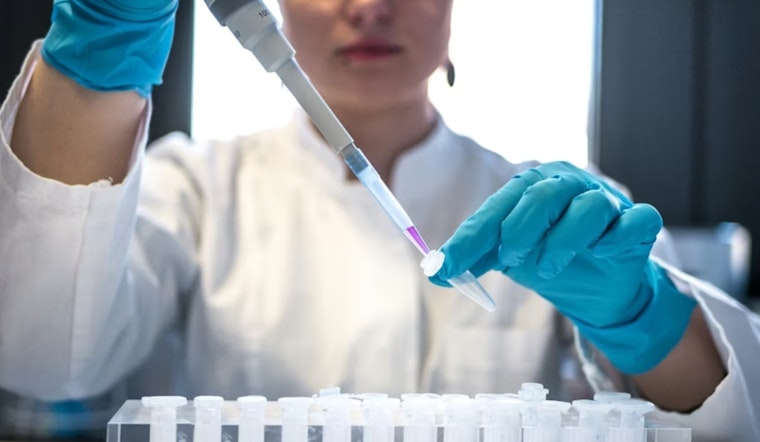
La Jolla scientists are stepping into a national push to get new medicines from lab bench to bedside faster. The project, known as PREDICTS, has been awarded up to $31.7 million from a federal health agency to build computational and ex vivo models that can better predict human toxicity and speed up drug development. Researchers at Sanford Burnham Prebys in La Jolla are among the partners that will funnel human data into the system.
The award is funded by the Advanced Research Projects Agency for Health (ARPA-H) through its CATALYST program, according to the San Diego Union-Tribune. Deep Origin, a South San Francisco team that is leading the PREDICTS consortium, says the contract backs a 4.5-year effort to build an integrated "virtual human" safety platform intended to cut reliance on slower animal studies. The company describes the effort as a way to flag safety and dosing problems earlier in the pipeline so fewer flawed candidates reach clinical trials.
How the PREDICTS Platform Will Work
The consortium plans to bring together a cloud-based repository of ADME-Tox datasets, machine-learning models trained to spot safety liabilities, and independent checks on how well those models perform, according to Sanford Burnham Prebys. Steven Olson, the institute's executive director of medicinal chemistry, said the work is meant to predict a molecule's distribution, clearance and organ-specific risks before clinical testing. Taken together, those pieces are designed to give drug developers a human-relevant, testable readout before costly clinical trials begin.
Regulatory Momentum
Federal regulators have been shifting toward accepting so-called new approach methodologies, including organoids, microphysiological systems and computational toxicity models, as alternatives to some animal studies. The Food and Drug Administration outlined that policy shift in 2025. That evolving pathway could make it easier for a validated in silico safety platform to be considered in investigational filings and early human studies, according to the FDA.
The Consortium
Deep Origin is heading the PREDICTS team, with collaborators that include Ginkgo Bioworks, Tessel Biosciences, Netrias, MIDO, ImmVue and Sanford Burnham Prebys. Ginkgo Bioworks says it will contribute high-throughput perturbation datasets to help train the models, while Tessel Biosciences plans to scale up human tissue models of the gut, kidney and blood-brain barrier to generate data that can be used to validate predictions.
Why the Stakes Are High
Drug development remains slow and extremely expensive. Recent analyses show capitalized mean development costs sitting in the high hundreds of millions of dollars, while success rates from first-in-human testing to approval stay low across many disease areas. A JAMA Network Open economic analysis estimated an average capitalized cost of roughly $879 million. A large clinical trial study, detailed in a Biostatistics review Biostatistics, documents low probabilities of approval from phase to phase. Together, those figures explain why a more predictive safety platform is attracting this level of federal backing.
What It Could Mean for La Jolla
Local leaders say joining the consortium could strengthen San Diego's long-established life science cluster by channeling federal research dollars and experimental work into area labs. "It is a transformational goal," David A. Brenner, president and CEO of Sanford Burnham Prebys, said in the institute's statement about joining PREDICTS. If the models prove accurate, proponents say developers could advance promising compounds into human testing with more confidence and lower preclinical costs. Sanford Burnham Prebys provided the comment.
Next Steps
The PREDICTS project will start by assembling and curating large datasets, running high-throughput ex vivo experiments, and training its ADME-Tox models. Later phases are slated to test the platform with industry partners and work with regulators to refine acceptance criteria. Deep Origin states the its goal is to produce open datasets and validated models that other researchers and companies can utilize to accelerate safer drug development. According to the company, Phase II will involve hands-on trials with drug developers and feedback from the FDA to advance the models toward regulatory readiness.





