

























































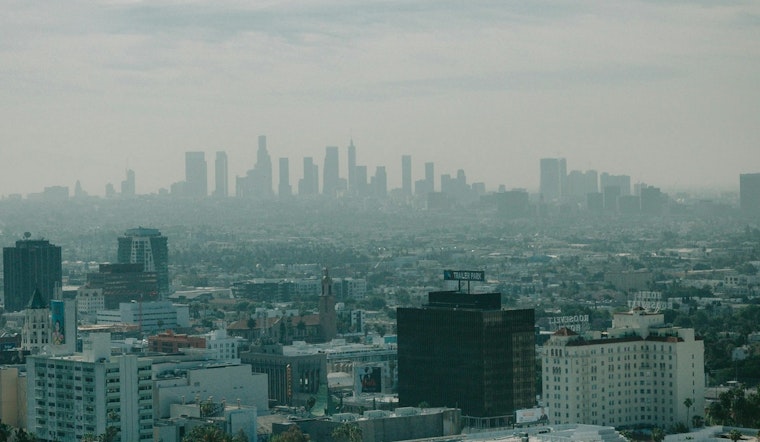
Los Angeles residents are bracing for an array of severe weather conditions with the National Weather Service declaring multiple alerts across the region. An Air Quality Alert has been in place due to worsening air quality, with a mandatory wood-burning ban effective for the South Coast Air Basin, which includes parts of Los Angeles, Riverside, San Bernardino counties, and Orange County, aiming to mitigate the health risks posed by fine particle pollution.
The forecast for the Los Angeles area, as reported by the National Weather Service, anticipates showers that could intensify by Tuesday, leading to torrential downpours with the possibility of 1 to 2 inches of rain Tuesday night and an additional 2 to 3 inches on Wednesday while the flood watch remains in effect from Tuesday afternoon through Wednesday evening, according to the National Weather Service; this weather system is marked by a moderate to strong atmospheric river which is likely to cause urban flooding and raise concerns over mud and debris flows especially in the burn scar areas.
The Air Quality alert explicitly cites the South Coast AQMD's extension of the "No-Burn" rule, which prohibits burning wood, pellets, or manufactured fire logs across a vast expanse of the region to protect the public from additional pollution exposure, as per advisory details from the South Coast Air Quality Management District (AQMD).
The looming flood watch adds further caution, with the National Weather Service stressing the potential for flooding across various regions, including the Santa Monica Mountains, Los Angeles County beaches, and San Gabriel Valley there are advisories urging residents in prone areas to take preemptive measures against possible flooding, as "excessive runoff may result in flooding of rivers, creeks, streams, and other low-lying and flood-prone locations," along with mud and debris flows that could impact foothill and mountain locales.
Residents of affected areas are urged to remain vigilant, monitor the latest forecasts, and adhere to all precautionary and preparedness measures. The South Coast AQMD also advises limiting outdoor activities and running air conditioners or air purifiers indoors to reduce health risks during times of poor air quality.





