

























































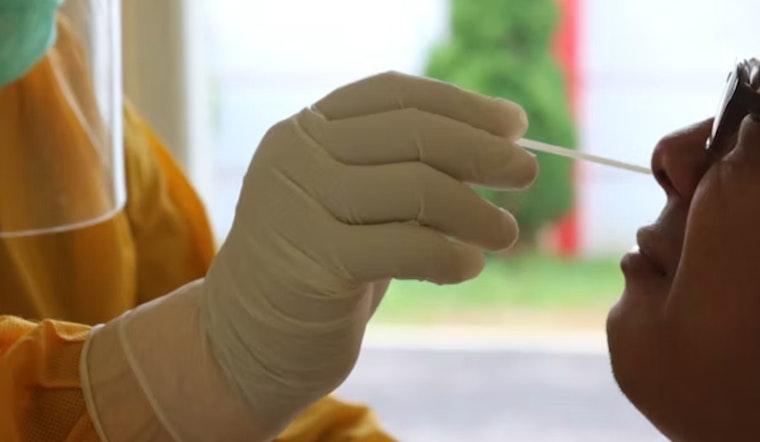
California is starting to see a summer COVID creep, with test positivity and wastewater readings ticking up in several regions even as hospitalizations stay relatively low. Public health officials say the trend is still modest, but it is most consequential for infants, older adults and people with weakened immune systems. Hospitals and state agencies are urging those at higher risk to get current on their COVID shots and to test quickly if symptoms show up.
Federal and state trackers flag growth
By mid July, national models were already hinting at rising transmission in parts of the country. The U.S. Centers for Disease Control and Prevention reported that its R_t assessment showed infections were “growing or likely growing” in several states, including California, as of July 15, 2026. State surveillance and wastewater data tell a similar story, with gradual increases in viral signal across California, according to the California Department of Public Health.
Early signs: tests and sewage
For the week ending July 18, about 3.4% of COVID tests in California were positive, up from roughly 1.2% a month earlier. Los Angeles County’s test positivity also climbed sharply in mid-July, according to reporting by the Los Angeles Times. In Northern California, wastewater levels are nudging higher too: San Francisco’s monitoring network is picking up increases, and Santa Clara County has told reporters that readings in the San José and Palo Alto sewersheds are now considered “high,” a pattern that often comes before a rise in reported cases. While these signals are still modest compared with the bigger summer waves of past years, they clearly mark a shift from the very quiet stretch of recent months.
“We’re kind of due for more people getting sick,” UC San Francisco infectious disease specialist Dr. Peter Chin-Hong told the Los Angeles Times. Health systems such as Kaiser Permanente are seeing a small bump in cases, mostly among outpatients. State officials say hospital admissions and deaths remain low for now, but they are watching the numbers closely as the season unfolds.
Vaccines: who should move now
California health authorities continue to recommend that everyone 6 months and older stay up to date on COVID vaccination. They are urging people at higher risk to get the current 2025–26 formulation this summer while a 2026–27 update is in the works for fall, according to the California Department of Public Health. The 2025–26 updated shots, which rolled out widely in September 2025, have shown real-world protection in recent effectiveness research, according to JAMA Network Open.
Treatment and testing: act early
For people at higher risk of severe illness, timing is everything. If you test positive, early antiviral treatment can significantly reduce the chances of the worst outcomes. The Centers for Disease Control and Prevention notes that oral antivirals such as nirmatrelvir-ritonavir (Paxlovid) are authorized for eligible patients and should be started as soon as possible, generally within five days of symptom onset. A health care provider can help determine whether you qualify. State and federal Test-to-Treat programs, along with many pharmacies, still offer pathways for quick evaluation and prescriptions.
Bottom line: the current rise is modest, but the combination of higher test positivity and climbing wastewater levels is exactly what public health teams watch to get ahead of a larger wave. Californians at higher risk are being urged to check in with their clinicians about vaccination and to have a plan for testing and early treatment if symptoms appear.




