

























































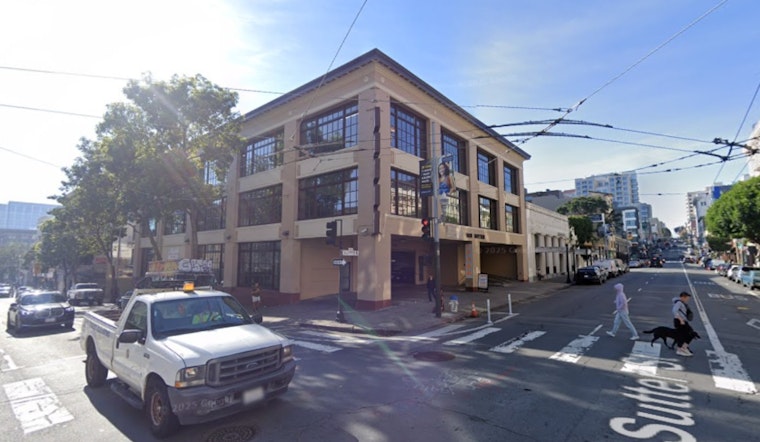
Lower Nob Hill’s skyline is officially getting a new spike. San Francisco Mayor Daniel Lurie on Thursday joined developers to break ground on a mixed-income high-rise that will add roughly 303 apartments to the downtown housing supply. About a third of those homes are reserved for lower-income residents, making it one of the largest deed-restricted projects to actually start construction in the city in months. The site, cleared of a long-vacant commercial building and a former funeral home, is also slated to include street-level retail and a childcare facility.
According to NBC Bay Area, the project is rising at 1111 Sutter St. as a 23-story tower with 303 units, roughly one-third of them reserved for lower-income households. The developer expects construction to wrap up in about 23 months. The station also noted that the Board of Supervisors recently signed off on a package of changes designed to speed up housing production, a measure Lurie plans to sign into law on Friday.
Developer Martin Building Company describes the project, often referred to as "ElevenEleven" in coverage, as a 22-story, 235-foot tower at 1101–1111 Sutter that will deliver 303 homes, including 101 below-market-rate units and a 4,000-square-foot child care center. According to Martin Building Company, the design keeps an adjacent historic auto-repair structure, which will be reused as public parking while the new tower rises on the neighboring lot. The San Francisco Chronicle reported that a mix of financing tools and regulatory exemptions helped make the unusually large mixed-income deal pencil out in today’s tough market.
How the money came together
Berkadia confirms it arranged about $141.9 million in HUD 221(d)(4) construction financing to shore up the mixed-income package, a large federal loan that helped unlock tax credits and state programs. The financing closed this fall after the developer pursued a two-track approach, splitting the affordable and market-rate components, which made the tax-credit math work, according to Berkadia. That capital stack is essentially the reason a project of this scale is moving forward while many other approved towers are still gathering dust.
What neighbors will see
At street level, the project will preserve and reuse the three-story concrete auto-repair building at Sutter and Larkin as public parking. The residential tower will go next door, with the ground floor activated by retail space. Martin Building Company and planning filings also call for widened sidewalks, new landscaping and several resident amenity decks. City planning records list the project’s environmental review and approvals under file 2019-022850ENV, paperwork that cleared the way for demolition and this construction start, according to SF Planning.
Permit milestones and demolition timeline coverage in Hoodline tracked the long list of approvals that set the stage for this month’s groundbreaking, following the project through building permits and neighborhood feedback.
City Hall wants more of this
City officials see projects that mix creative financing with streamlined rules as the model San Francisco needs if it hopes to hit state housing targets and avoid outside enforcement. As The San Francisco Chronicle noted, similar combinations of public-finance tools and administrative exemptions have been key in pushing a handful of big housing developments across the finish line. With shovels now in the ground, planners will be watching closely to see whether this blueprint can be repeated on other underused downtown parcels.
"When we cut red tape, we support housing, we encourage investment, good things follow," Lurie said at the ceremony, according to NBC Bay Area. Developers say construction will move into vertical framing once site work is done, and they expect residents to begin moving in around two years, although exact timing will depend on financing draws and permit sequencing. In the meantime, neighbors can expect construction noise and temporary street changes, while City Hall gets a real-world test of whether streamlined rules and complex financing can actually turn approvals into homes.





