

























































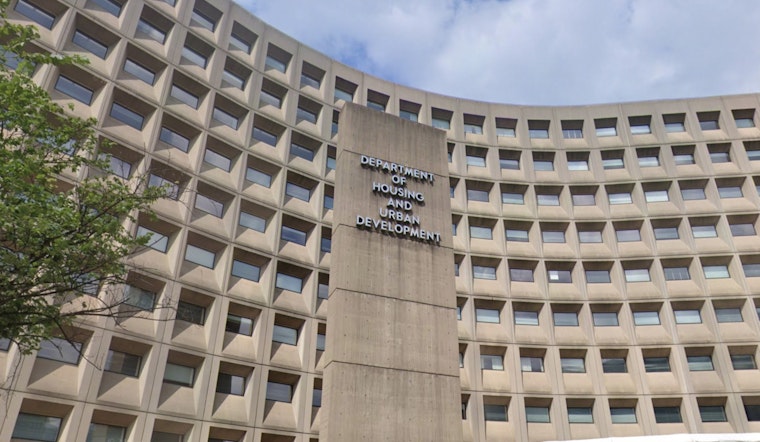
Massachusetts Attorney General Andrea Joy Campbell has successfully taken on the U.S. Department of Housing and Urban Development (HUD), securing a court order that puts a temporary stop to policy changes threatening to exacerbate the issue of homelessness. According to a statement released by Campbell's office, a federal judge has preliminarily blocked HUD from revamping the Continuum of Care program, which serves as the most generous federal funding source for homelessness assistance. This legal win follows a lawsuit filed by a coalition of 22 states, alleging that HUD's proposed adjustments were illegal and would leave countless individuals without homes.
The changes to the Continuum of Care program would have significantly impacted Massachusetts, which has 11 programs that depend on HUD for over $136 million in funding annually. These programs provide crucial support for nearly 4,000 individuals, including the chronically homeless and disabled. "Helping Massachusetts residents secure stable housing builds a foundation for addressing other urgent challenges like job training, mental health care, and substance use treatment," AG Campbell said, stating the importance of uninterrupted support. The lawsuit argued to effectively maintain the preexisting solutions that support our most vulnerable populations, rather than allowing the federal government to obliquely put more residents at risk of homelessness.
The federal judge ruled that the proposed changes from HUD violated congressional intent by drastically reducing funding allocated for long-term housing and imposing unlawful conditions. These included penalizing housing providers acknowledging gender identity, requiring residents to essentially sign up for additional services to obtain housing, and disincentivizing programs in regions without stringent anti-homelessness laws. These conditions are in direct conflict with HUD's previous guidance as well as Congress's authorization, a point Campbell and the coalition stressed in their legal challenge.
In a legal narrative that stretches the bounds of intent, HUD was accused of overstepping its boundaries by not adhering to the program timelines set by Congress and issuing a Notice of Funding long past its deadline, which would have guaranteed gaps in crucial funding. As a result, the judge mandated HUD to process applications under the terms that existed before the alterations. In AG Campbell's words, "Today’s court order ensures that the federal government cannot stand in the way of helping us address our critical housing crisis." In an aggressive legal market, Massachusetts led the battle, with support from a cohort of like-minded states and two governors, all unified in rebellion against what they perceived as an unconscionable federal policy pivot.
Spanning from Arizona to Wisconsin, other states' attorneys general joined the plaintive chorus alongside governors of Kentucky and Pennsylvania in the litigation against HUD. The charge was clear: HUD's actions were arbitrary and capricious, disrespecting both the law and the welfare of people it was intended to shelter. For now, thanks to the efforts of AG Campbell and the coalition, Massachusetts and other states can breathe temporarily easier, with the court's decision foregrounding the need for a more equitable, lawful approach to tackling the homelessness crisis.




