

























































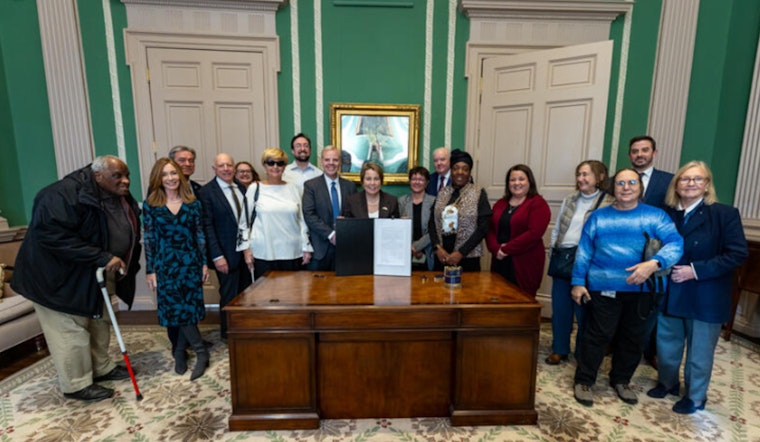
In a significant move for historical transparency, Governor Maura Healey celebrated the passage of a new law on November 25 that will allow the public to access Massachusetts' state institutional records older than 75 years. The legislation intends to aid family members in understanding their ancestors’ experiences in state-run facilities, giving them the dignity of knowing their past, according to an announcement on the Massachusetts' official website.
The access provided by this law also aims to thoroughly inform researchers and scholars looking to reconstruct a more complete historical narrative. "It's crucial that family members have access to the records of their loved ones from their time in state institutions,” said Governor Healey, recognizing the measure's role in addressing a painful chapter in the state's treatment of individuals with intellectual or developmental disabilities, as noted by the state's official website. Healey extended gratitude to the legislators and those who advocated passionately for the change.
Lieutenant Governor Kim Driscoll also praised policymakers and the advocacy community for their roles in this transformative development. Echoing Healey, Senate President Karen E. Spilka highlighted the law's potential in providing closure and acknowledged State Senator Mike Barrett's relentless advocacy. Barrett emphasized the importance of not selectively choosing to tell only the pleasant aspects of the state's history, citing the need to learn from past mistakes.
State Representative Sean Garballey and State Representative Mindy Domb, both instrumental in the bill's passage, were vocal about the need to restore dignity to those mistreated within these institutions. "I believe that this small piece of text is crucial to further restoring the stories and identities of the deceased," Garballey stated, as mentioned by the Massachusetts' official website. Domb pointed out the steps the legislation takes to bring accountability to state-provided care, signifying a historical reckoning for Massachusetts by allowing previously silenced stories to be heard.
As the public awaits the unfolding of narratives long kept from view, the new law marks an advancement toward a more inclusive and truthful understanding of the Commonwealth's legacy. The application of this policy will include records from more than 25 state institutions, many of which are now closed, covering a vast and largely untold aspect of Massachusetts' societal past.




