

























































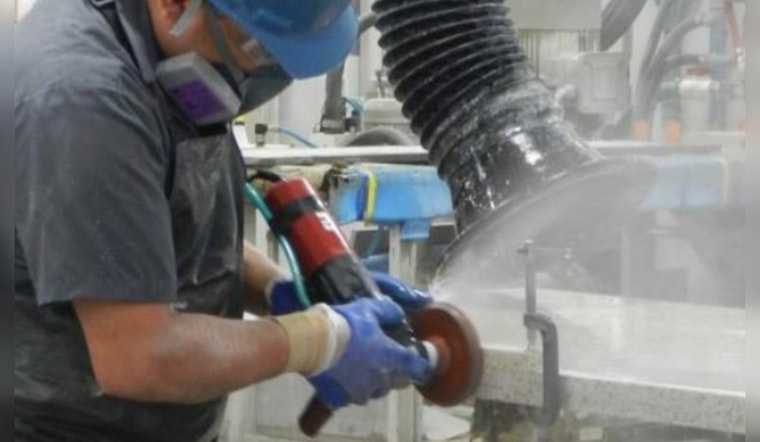
In light of the first confirmed case of silicosis linked to the stone countertop industry in Massachusetts, public health officials are cracking down on workplace safety. The Massachusetts Department of Public Health has issued a safety alert to employers, pushing for immediate action to shield workers from the dangers of silica dust. The case, which was recently diagnosed in a Hispanic man in his 40s who worked in the industry for 14 years.
The afflicted man, having spent over a decade laboring with stone countertop fabrication and installation, is now a stark example of the occupational risks involved. The popularity of engineered stone, notable for containing over 90 percent silica compared to less than 45 percent in granite, has led to a surge in silicosis cases, according to the Department of Public Health. They've seen increased occurrences in other states and countries, signaling that this is not an isolated incident.
Massachusetts public health authorities are fervently warning that employers must prioritize the implementation of workplace controls to minimize the exposure to deadly silica dust. "Silicosis is a devastating, life-altering disease – and one that is also absolutely preventable," said Public Health Commissioner Robbie Goldstein, as reported by the Department of Public Health. Goldstein emphasized the dire need for businesses to commit to their workers' health and safety.
As per Emily H. Sparer-Fine, Director of DPH's Occupational Health Surveillance Program, not just the sacrificing of employers, but also the entire supply chain can contribute to reducing the health hazard. The statement made by the Massachusetts Department of Public Health reads, "Beyond the critical role employers play, everyone involved in the supply chain – from consumers and designers to contractors – can help reduce the danger by opting for materials that contain less silica and pose fewer health hazards." Too many cases and dozens of fatalities indicate the critical need for intervention, with demographic data from the U.S. Census Bureau showing that most workers in this industry are under 45 years old, predominantly male, and over one-third Hispanic/Latino.
New procedures suggested include wet cutting, proper ventilation, and the use of HEPA-filtered vacuums to manage dust. Employers are also advised to conduct regular assessments of silica levels and offer medical exams as part of a surveillance program. Massachusetts has resources available through the Department of Labor Standards' On-Site Consultation Program, which assists businesses in identifying and correcting potential hazards for free.
Health care providers are being urged to actively surveil silicosis by inquiring about patients' occupational histories, especially if they present with respiratory issues. With the potential for the disease to take years to manifest symptoms, the emphasis is on catching it early. While preventing exposure remains the best defense, early intervention can provide crucial in slowing the disease's progression. Massachusetts officials are determined to keep the pressure on to shield the state's workers from these preventable tragedies.





