

























































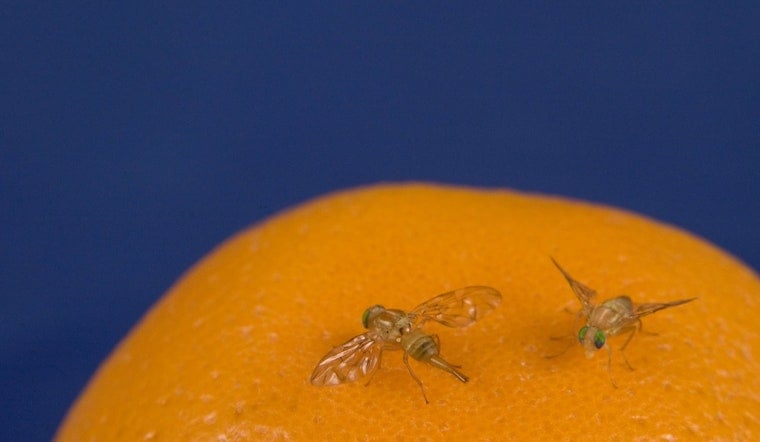
Mexican fruit fly larvae have been detected this month in the Rio Grande Valley, prompting federal and state officials to act quickly. New quarantines affect parts of Hidalgo and Cameron counties, including areas near La Feria and Peñitas. Authorities are asking growers and backyard tree owners in the regulated zones not to move their fruit while surveys and treatments are underway.
On Dec. 3, the U.S. Department of Agriculture’s Animal and Plant Health Inspection Service (APHIS) confirmed a Mexican fruit fly larva in a grapefruit from a commercial grove in La Feria. Working with the Texas Department of Agriculture, APHIS established a quarantine on Dec. 5 covering about 71 square miles and 831 acres of commercial citrus.
Where the flies were found
State surveillance turned up a second confirmed larva on Dec. 4 on a sour orange tree at a residential property in Peñitas, Hidalgo County. That discovery prompted officials to establish the Peñitas quarantine on Dec. 12, spanning about 53.18 square miles and including some 223.3 acres of commercial citrus. Subsequent testing led to an expansion of the La Feria zone to roughly 124.16 square miles and about 970.6 acres, the Texas Department of Agriculture notes on its quarantine page.
Rules for residents and growers
Federal officials say APHIS is implementing safeguards and restricting the interstate movement of regulated items from quarantined areas. Residents are reminded not to move homegrown citrus out of the zones, to double-bag and discard infested fruit in municipal trash instead of composting, and to allow survey teams to hang traps and inspect trees.
Why growers are worried
The Rio Grande Valley is Texas’ citrus belt, and the industry is already dealing with drought, citrus greening, the lingering effects of the 2021 winter freeze, and unreliable water deliveries that have forced some growers to plow under groves, according to MySA. Mexican fruit fly larvae burrow into ripening fruit and cause internal rot, making harvests unmarketable. Early detection and rapid containment are critical for both small and large producers.
What officials will do next
The Texas Department of Agriculture says primary eradication tactics include continued surveillance, targeted bait sprays and Sterile Insect Techniques (SIT), and officials will adjust quarantine boundaries as surveillance data change, according to the department’s quarantine notices. Local TDA offices also provide interactive maps and legal descriptions so residents can check whether a property falls inside a regulated area, the department notes.





