

























































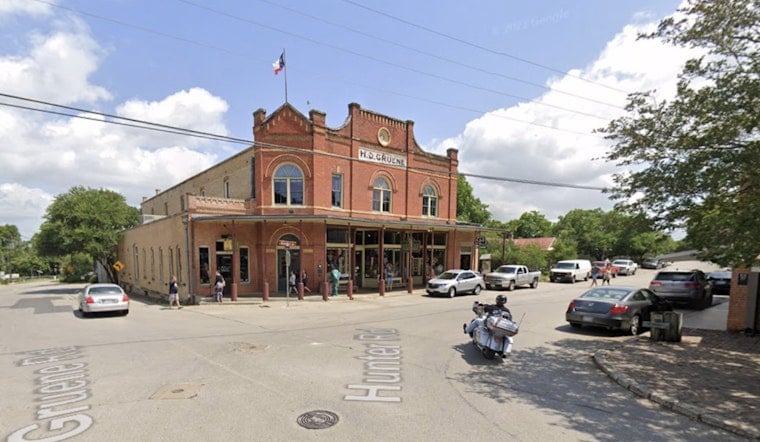
New Braunfels City Council has approved a $1.35 million contract with Pape-Dawson Engineers Inc. to finalize designs for pedestrian, bicycle and ADA improvements throughout the Gruene Historic District, moving forward a project that missed out on the city's 2023 bond program. The council's August 10 vote also greenlights the New Braunfels Economic Development Corp. to invest $1.4 million toward the project's final design, stakeholder outreach and state coordination.
The Gruene Area Multimodal Improvements Project is meant to address pedestrian, bicycle and ADA needs across the historic district, according to agenda documents cited by Community Impact. Plans call for intersection upgrades at Gruene Road and Rock Street as well as Gruene Road and Hunter Road, plus new shared-use paths along both roads. Pape-Dawson, the firm now finalizing those designs, is a San Antonio-based civil engineering company with a New Braunfels office that has also worked on portions of the Loop 1604 expansion in San Antonio, according to San Antonio Express-News.
Construction is currently projected at $7.09 million, with the Alamo Area Metropolitan Planning Organization pledging $5.57 million toward that cost and the New Braunfels EDC covering the remaining 20 percent, or $1.52 million. AAMPO's grant funding traces back to a broader $34.5 million allocation the agency awarded to New Braunfels and TxDOT using Federal Highway Administration and TxDOT funding streams, the Express-News reports.
A Project That Missed the 2023 Bond
The Gruene corridor was flagged as a priority area for pedestrian and bicycle improvements well before this summer's vote. RPS Engineering prepared a preliminary design for roadway and pedestrian upgrades along Gruene Road back in September 2022, but the project itself was not advanced through the city's 2023 bond program. That bond cycle saw the city's Bond Advisory Committee whittle $183 million in proposed capital projects down to a $140 million final ballot recommendation, per the same account, leaving unfunded initiatives like the Gruene multimodal work on the city's Capital Improvement Plan while officials pursued grant opportunities instead.
That patience paid off when AAMPO stepped in with regional grant funding, and the New Braunfels EDC's $1.4 million design commitment is authorized under Section 505.152 of the Texas Local Government Code, a statute allowing Type B economic development corporations to fund infrastructure that supports tourism and community facilities, according to a filing published on the City of New Braunfels legislative portal. Type B corporations like New Braunfels' EDC are funded through local sales taxes, giving the city a mechanism to underwrite pedestrian infrastructure without touching bond dollars.
Timeline Points to 2031, But City Wants to Move Faster
New Braunfels Deputy City Manager Jordan Matney said the project's formal construction bidding process through AAMPO is set for 2031, but city officials hope to speed up that timeline if final design plans and funding commitments come together ahead of schedule, the Express-News reported. That 2031 date reflects AAMPO's default multi-year funding schedule, though early completion of design and agency approvals could allow the project to go out to bid sooner.
The corridor has already seen other infrastructure work move forward while pedestrian design was pending. New Braunfels Utilities wrapped up the final phase of a separate $7 million sewer main rehabilitation project along the 1200 block of Gruene Road earlier this year, replacing a 12-inch line with an 18-inch main and adding an odor control unit, a project Hoodline detailed in December. That utility project stemmed from NBU's 2021 Wastewater Master Plan and was intended to improve reliability near the Guadalupe River bridge, according to New Braunfels Utilities.
Tourism Pressure Keeps Building on Gruene Road
The push for safer sidewalks and crossings comes as Gruene keeps pulling in visitors. Tourism and hospitality in New Braunfels generated an average annual economic impact of $1.3 billion and drew more than 6 million visitors in 2024, with the Gruene Historic District serving as one of the city's primary historic and entertainment destinations, according to the New Braunfels Convention & Visitors Bureau. A study by Impact DataSource found that direct hospitality activity alone contributed $802 million in direct economic output, and the state recognized that momentum by certifying New Braunfels as a Tourism Friendly Texas Certified Community in January 2025.
Private development has followed the tourism dollars into the corridor. Recent proposals include a 3-acre retail and dining village from Meyer Brant Custom Homes and a $7 million multi-tenant bank and taproom facility near the historic core, projects Hoodline covered in a July report on the shopping cluster and in an earlier bank-and-taproom story. Local residents and city leaders have debated how to balance that commercial expansion with the strict preservation standards attached to the 25-acre Gruene Historic District, which joined the National Register of Historic Places in April 1975 and still retains more than 90 percent of its original late-19th-century German-Texan structures, according to Wikipedia.
For now, the design contract with Pape-Dawson marks the clearest step yet toward turning years of planning into pavement. Whether that translates into shovels in the ground well before 2031 depends on how quickly the final design, stakeholder outreach and state coordination the EDC is funding can clear the remaining hurdles.





