

























































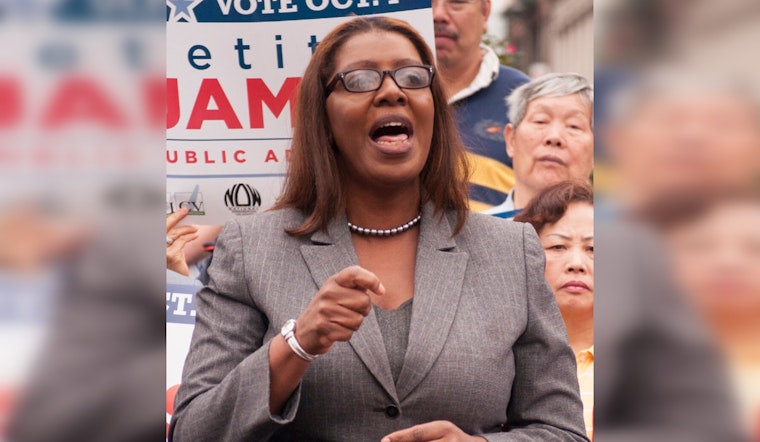
The legal dispute escalates as New York Attorney General Letitia James questions the authority of acting U.S. Attorney John Sarcone III. The issue centers on Sarcone’s power to issue subpoenas related to James’ investigations involving President Donald Trump and the National Rifle Association. In a recent court session, both sides addressed the legality of Sarcone’s appointment and his ability to enforce federal law in this matter.
According to a Gothamist report, the dispute began when Sarcone, appointed by former U.S. Attorney General Pam Bondi, attempted to continue his role beyond the expiration of his initial 120-day interim term. Federal judges have previously invalidated several Trump-appointed prosecutors for bypassing Senate confirmation. James’ legal team contends that Sarcone’s efforts to remain in office past his provisional term may be unlawful and contravene the procedures established by Congress.
U.S. District Judge Lorna Schofield, who is overseeing the case, heard arguments from both sides but has not yet indicated a position. James’ office is seeking to invalidate the grand jury subpoenas and challenge Sarcone’s role in the investigations, asserting that his actions exceed legal authority. On the other side, Assistant U.S. Attorney Richard Belliss argued that Sarcone is lawfully serving as a special attorney and described efforts to disqualify him as extreme, as reported by Spectrum News 1.
The case has potential political implications beyond the courtroom as James prepares for a reelection campaign next year. Both the Democratic and Republican parties are closely watching the proceedings, and the outcome could influence the broader political landscape. James continues to pursue her investigations, while President Trump has publicly called for scrutiny of her actions.
No definitive timeline has been set for Judge Schofield’s ruling on Sarcone’s status, leaving the case unresolved. The proceedings are part of a wider national discussion, as courts across the country address the implications of irregular appointments. The outcome could have consequences beyond New York and may set a precedent amid ongoing debates over the structure and authority of the federal legal system.





