

























































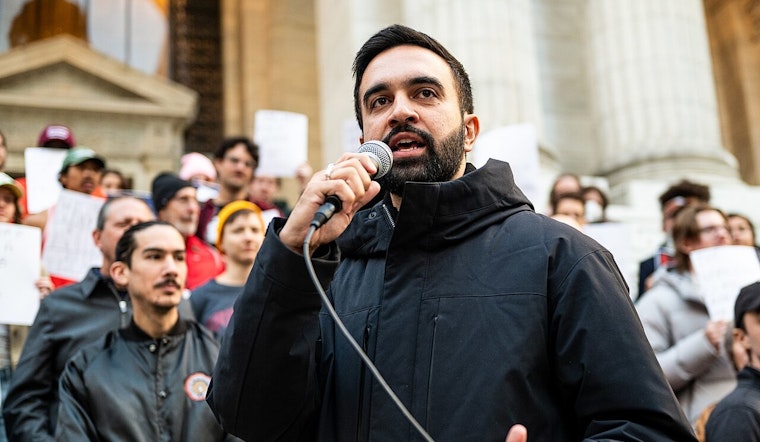
At the crossroads of local politics and international controversy stands Zohran Mamdani, New York City's Mayor-elect , whose recent win is raising eyebrows – and voices – on matters concerning Israel and peace in Gaza. According to a recent interview on the New York Post, Rabbi Marc Schneier of The Hamptons Synagogue confronted Mamdani about his views, which include supporting the boycott, divestment, and sanctions campaign against Israel. Schneier asserts Mamdani is "out of touch with the Jewish community," and also with "the greater Muslim world," a statement he claims to have expressed directly to Mamdani.
Mamdani, who is a practicing Muslim, has been under fire for his strong stance on arresting Israel Prime Minister Benjamin Netanyahu for alleged war crimes in Gaza. The rabbi argued that by refusing to recognize Israel's right to exist as a Jewish state, Mamdani is not on the same page as many global Muslim leaders who are proponents for a two-state solution. In the fray of criticism, the mayor-elect's position appears to be an anomaly to Rabbi Schneier, who routinely speaks to Muslim leaders across diverse regions, including Saudi Arabia and Asia. Schneier also suggested that Mamdani’s outlook is, in part, shaped by his father, Mahmood Mamdani of Columbia University, whose teachings on colonialism have been described as anti-Israel rhetoric.
While Rabbi Schneier has voiced his concerns, Kenneth Roth, former executive director of Human Rights Watch, applauds Mamdani's break from the expected political silence on Israel. As detailed in The Guardian, Mamdani did not shy away from calling out what he describes as genocide by Israel in Gaza. His frank approach earned him the support of one-third of New York's Jewish voters despite his unorthodox views around Israel, suggesting a shift in the political landscape where support for Israel is no longer a given, even among New York's considerable Jewish constituency.
However, this shift doesn't necessarily echo through the pillars of America's broader political arena. Roth notes that New York's denser Jewish population and Democratic leanings lend themselves to more progressive outlooks, which isn’t always a reflection of the sentiment held in cities with smaller Jewish communities. Yet, here we have a newly-elected mayor in one of America's most visible cities, willing to challenge the status quo on Israel's policies. Roth also references the implications for the Netanyahu government if the U.S. government’s stance on Israel begins to wane – a development that could pivot on New York's changing political tide.
Moving forward, it seems Mayor-elect Mamdani may have serious legislative work ahead as both Rabbi Schneier and Mamdani have toyed with the idea of banning protests in front of houses of worship in New York City. Despite their ideological differences, a common ground was found on this issue, especially after a group of anti-Israel protesters targeted Schneier's synagogue (Park East Synagogue). Notably, Mamdani has engaged in subsequent conversations with the rabbi, indicating a capacity for dialogue amidst contention.





