

























































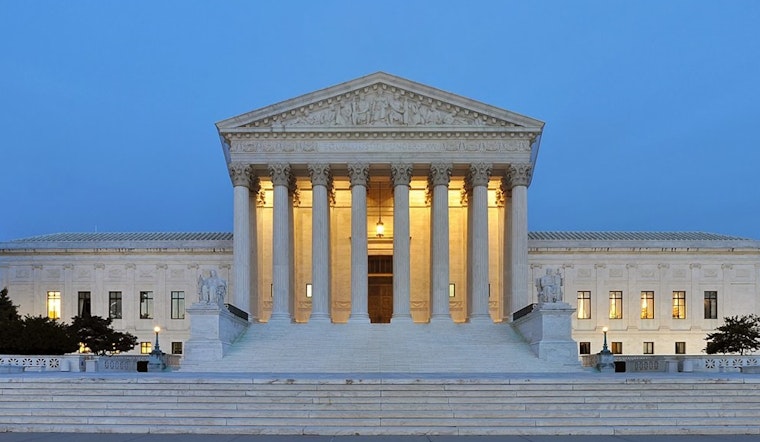
In a definitive check on presidential power, the U.S. Supreme Court has upheld a lower-court ruling that President Trump's attempt to federalize the Illinois National Guard was unlawful. The high court's decision, a momentous one with echoes across states, notably in Oregon, takes a stand against what it sees as the misuse of statutes intended for extreme situations. This ruling stems from similar attempts by the Trump Administration to commandeer Oregon's National Guard, which have now been thwarted thanks to the vigilance of judicial oversight.
Attorney General Dan Rayfield voiced his support for the Supreme Court's decision, highlighting the foundational precept of American governance that no person, including a president, is exempt from adherence to the law. Having been clear from the beginning, the statement from Rayfield, which was denied by the Trump Administration's overreach in Oregon by inventing emergencies, resonates with a broader sentiment of constitutional reverence. "Today’s decision is an important reminder that the rule of law still matters—even when it’s inconvenient for those in power," Rayfield declared in a statement.
True to the heart of the issue at hand, the Supreme Court's decision reasserts that the National Guard's purpose is to serve the people under the lawful authority of their respective states, not to be wielded as a political instrument. This outcome ensures that attempts to circumvent state authority will meet with staunch opposition from the highest judicial body. "The Supreme Court made it clear that a president cannot federalize the National Guard by misusing statutes meant for truly extraordinary circumstances," said Rayfield, emphasizing the importance of this precedent-setting decision.
In Oregon, where the ramifications of this ruling will be closely watched, the role of the National Guard as a state entity is safeguarded. In response to the ruling, which has reaffirmed the authority of states over their own militia forces, praising the decision that he sees as a reinforcement of a basic constitutional principle, Attorney General Dan Rayfield was not shy in celebrating the scope of this victory for federalism. "Our Guard exists to serve people, under the lawful authority of our state, not as a political tool," Rayfield told the Department of Justice.
As the dust settles on this significant ruling, it’s clear the Supreme Court has sent a message that balance and boundaries within American government remain at the core of its operating principles, ensuring that not even the highest office in the land can override the rule of law for political convenience or gain. The implications of this decision will undoubtedly reverberate through state-federal relations and set a tone for future disputes over the scope and limits of executive power.





