

























































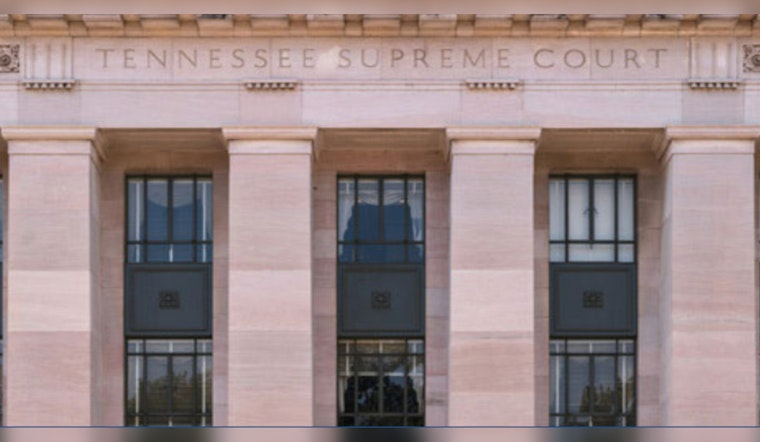
In a significant legal move, the Tennessee Supreme Court has ruled on the controversial issue of the state's redistricting statutes. In the case of Gary Wygant, et al. v. Bill Lee, Governor, et al., the court addressed claims from Tennessee voters who argued that the new House and Senate voting districts were in breach of the Tennessee Constitution. Following the latest census data, the General Assembly had redrawn the district lines in February 2022, prompting litigation from concerned citizens regarding the state's adherence to constitutional boundaries.
A Gibson County voter, Gary Wygant, asserted that the division of Gibson County into two House districts was against the provisions of the state constitution. Citing Article II, Section 5, Wygant's claim focused on a perceived infraction stemming from his home county's bisection. Taking a stance on the matter, the State countered that challenges like Wygant's were not justiciable, suggesting that questions of political redistricting are not subject to judicial review. They argued that the claim presented by Wygant concerned only his local county dispute, not the broader scope of the House map.
The trial court's panel, which was divided on the issue, decided in a nuanced manner. While it agreed that Wygant could legitimately challenge the split of his county, it rejected the larger challenge to the House map's justiciability. In Davidson County, another voter, Francie Hunt, contested that the Senate map did not number the county’s districts consecutively, in violation of Article II, Section 3. According to the court's opinion, the State also claimed that Hunt did not have standing to press forward with her grievance concerning the Senate map's numbering.
The State's highest court aligned with the trial court to some extent. It agreed on Wygant's standing regarding the Gibson County split but dismissed his challenge, stating the legislative reasoning behind the split did not contradict federal law requirements. However, they stopped short of embracing Hunt's position, ruling that she had not demonstrated a clear, particularized injury, which undercut her standing in this matter. As a result, the Court did not scrutinize her challenge in detail.
Yet the decision was not unanimous amongst the justices. Justice Holly Kirby penned a partial agreement and dissent, pointing out that in her view, Hunt did indeed have the standing to question the Senate map and should have succeeded in her challenge based on its merits. Justice Dwight Tarwater also issued a mixed opinion, disagreeing on the majority's conclusion that granted Wygant standing in the case of the Gibson County split. The majority opinion and separate dissenting opinions are available for public viewing on the Tennessee Courts' official website within the opinions section.




