

























































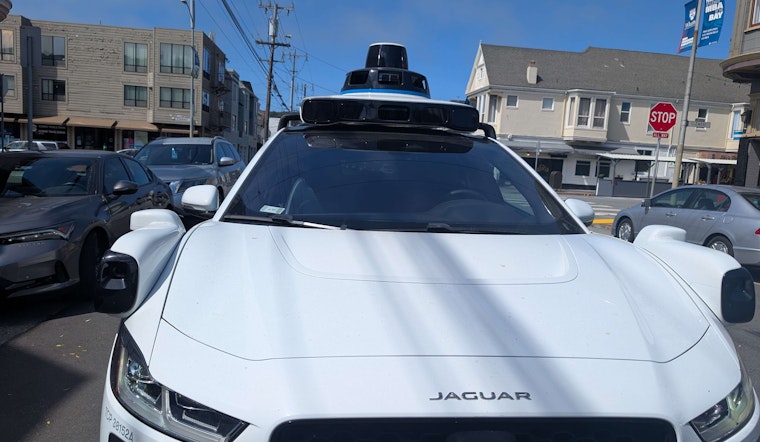
A Pennsylvania neurosurgeon has just dropped the most data-driven argument yet for why cities should stop blocking autonomous vehicles—and it's coming from someone who's spent weeks elbow-deep in crash statistics instead of Silicon Valley pitch decks.
Dr. Jonathan Slotkin, vice chair of neurosurgery at Geisinger Health System, published an op-ed in The New York Times this week declaring that Waymo's recently released safety data is so compelling that continuing to delay autonomous vehicle deployment has become ethically indefensible. His analysis of nearly 100 million driverless miles shows Waymo vehicles involved in 91 percent fewer serious-injury-or-worse crashes and 80 percent fewer crashes causing any injury compared to human drivers on the same roads.
"In medical research, there's a practice of ending a study early when the results are too striking to ignore," Slotkin wrote. "When an intervention works this clearly, you change what you do."
When the Data Gets Personal
Slotkin's argument carries particular weight given his day job involves treating the catastrophic aftermath of car crashes. He opens the op-ed with a scene trauma surgeons know too well: a teenager ejected in a rollover crash, rushed to surgery for abdominal bleeding, but already lost to severe head trauma. According to Jalopnik, which highlighted the piece, this isn't tech evangelism—it's a physician's frustration with preventable deaths.
The numbers are staggering. More than 39,000 Americans died in motor vehicle crashes last year, making it the leading cause of death for children and young adults after infancy, according to Slotkin's analysis. These crashes cause the bulk of spinal cord injuries and send 10,000 victims to emergency rooms every single day, with a combined economic and quality-of-life toll exceeding $1 trillion annually—more than the entire U.S. military or Medicare budget.
"I wrote it because I'm tired of seeing children die," Slotkin posted on X after the op-ed published, according to CleanTechnica. "Done right, we can eliminate car crashes as a leading cause of death in the United States."
The Intersection of Data and Controversy
The timing of Slotkin's op-ed is particularly striking given Waymo's recent string of headline-grabbing incidents. Just days before publication, a Waymo struck a small dog in San Francisco's Western Addition, coming weeks after the company's vehicle killed KitKat, a beloved Mission District bodega cat. In Los Angeles, a Waymo casually drove through an active police standoff with a suspect face-down on the pavement surrounded by officers with weapons drawn.
Perhaps most troubling, federal regulators are now investigating after Austin schools documented 19 separate instances of Waymo vehicles illegally passing stopped school buses since August—including five incidents that occurred after Waymo claimed it had issued software fixes. "We cannot allow Waymo to continue endangering our students while it attempts to implement a fix," Austin ISD officials wrote in a November letter demanding the company cease operations during school hours, according to TechCrunch.
These aren't theoretical safety concerns—they're actual incidents that keep making news. Yet Slotkin's point is that focusing on individual mishaps obscures a broader statistical reality that should matter more to policymakers making decisions about public safety.
The Context Nobody Wants to Discuss
Here's what gets lost in the outrage cycle: human drivers hit millions of animals every year. Human drivers blow past school buses regularly—Austin ISD has mailed more than 6,700 school bus citations since August, according to KXAN. Human drivers cause 39,000 deaths annually. But when a Waymo does any of these things, it becomes national news and prompts calls for bans.
Slotkin acknowledges these incidents but argues they're missing the forest for the trees. According to his deeper analysis published on X and reported by CleanTechnica, Waymo achieved a 96 percent reduction in injury crashes at intersections—"some of the deadliest I encounter in the trauma bay"—along with 92 percent fewer pedestrian crashes and 83 percent fewer crashes involving cyclists or motorcyclists.
"The physics signature: 47% of Waymo's contacts involve less than 1 mph delta-V," Slotkin noted in his technical thread. "They're not just avoiding crashes; they're converting unavoidable incidents into gentle bumps."
Why This Doctor Isn't Comparing Teslas
Slotkin is careful to distinguish between Waymo's fully autonomous system and Tesla's "Full Self-Driving (Supervised)" feature, which still requires human drivers to remain vigilant. Tesla recently released data suggesting their supervised system reduces crash frequency, but Slotkin notes we need more independent analysis before drawing conclusions, according to Jalopnik. Research on other partial automation vehicles has yielded mixed results, with the Insurance Institute for Highway Safety finding "no convincing evidence" that partial automation reduces crash rates.
The distinction matters because Waymo operates cars with no human driver at all, using cameras, radar and LiDAR sensors that create detailed 3D maps in cities where the company has studied every intersection. They only operate in areas they've thoroughly mapped—which is why the July data Slotkin analyzed represents primarily city driving, though Waymo began highway operations in November.
The Accountability Problem
San Francisco Supervisor Jackie Fielder, who organized rallies after KitKat's death, argues there's a fundamental accountability gap. "A human driver can be held accountable," she told the San Francisco Chronicle. "Here, there is no one to hold accountable."
Slotkin doesn't dispute this concern—in fact, he calls for stronger federal oversight. Current regulations require companies to report crashes but not miles driven or location data, making it impossible to calculate accurate crash rates. He argues we need mandatory reporting of crash rates, miles driven, geographic data, and independent audits verified against police reports, insurance claims and privacy-protected medical records.
But he maintains that perfect accountability shouldn't be the enemy of measurably better safety outcomes. "If every US vehicle performed like Waymo, we'd prevent 33,000-39,000 deaths annually and save $0.9-1.25 trillion in societal costs," he calculated in his detailed analysis. "Even partial adoption at 27% would save ~10,000 lives per year."
Why Cities Keep Throwing Up Roadblocks
Despite the safety data, cities are actively blocking expansion. Washington D.C. has postponed a key report for 18 months despite successful vehicle testing, according to The New York Times. Boston's City Council is considering requiring a "human safety operator" in every vehicle—effectively banning the technology that makes these vehicles safer than human drivers in the first place.
Slotkin argues policymakers need to "stop fighting this transformation and start planning for it." That includes workforce planning to address how autonomous vehicles will affect millions of commercial drivers, and ensuring robotaxis don't just pull riders from already-safe trains and buses. The benefits come from replacing personal vehicles, not public transit.
"We don't need everyone to use self-driving cars to realize profound safety gains," he wrote. "If 30 percent of cars were fully automated, it might prevent 40 percent of crashes, as autonomous vehicles both avoid causing crashes and respond better when human drivers err."
What About the Other Companies?
Here's a critical caveat: Waymo is the only autonomous vehicle company publishing comprehensive, independently verifiable safety data. Other companies either don't report data or provide incomplete information that can't be properly analyzed. Tesla operates a driverless pilot program in Austin but hasn't released performance data yet, according to The New York Times. Other companies operate ride-hail services without comparable transparency.
Slotkin is blunt about this: we simply don't know if other autonomous vehicles will achieve similar safety records. His argument applies specifically to systems as sophisticated as Waymo's that have proven their safety through transparent data collection.
The Statistical Reality vs. The Viral Video
A Reddit passenger who was inside the Waymo that struck the dog in Western Addition captured the tension perfectly: "Honestly I not sure a human driver would have avoided the dog either though I do know that human would have responded differently to a 'bump' followed by a car full of screaming people," they wrote, according to KTVU.
That's the paradox. Waymo's vehicles don't comfort crying children or immediately stop to check on an animal. They don't understand the emotional weight of driving through a police standoff. They can't recognize when a situation demands human judgment over algorithmic precision. But they also don't get distracted by phones, don't drive drunk, don't fall asleep, and don't make split-second decisions clouded by emotion or fatigue.
The National Highway Traffic Safety Administration has recorded Waymo taxis in at least 14 animal collisions since mid-2021, resulting in five deaths, according to the San Francisco Chronicle. That sounds significant until you consider it represents 100 million miles of driving—and human drivers hit millions of animals annually, though those numbers are largely unreported.
The Uncomfortable Math
Slotkin frames autonomous vehicles not as a technology story but as a public health intervention—one that should be evaluated by the same standards we use for medical treatments. When a drug or procedure shows this level of benefit in clinical trials, continuing to give patients the placebo becomes unethical.
"In driving, we're all the control group," he wrote, according to transportation policy expert David Zipper's commentary on X cited by Techmeme.
Critics like Zipper push back, asking whether we should apply the same urgency to proven interventions like bike lanes, automatic traffic cameras, and intelligent speed assist—all of which save lives at a fraction of autonomous vehicles' cost. It's a fair point that Slotkin doesn't directly address.
But his core argument is harder to dismiss: if Waymo's data holds up across broader deployment—and that's still a big "if"—then delaying adoption means accepting tens of thousands of preventable deaths and injuries while we wait for a perfect solution that may never arrive.
"There's a future where manual driving becomes uncommon, perhaps even quaint, like riding horses is today," Slotkin concluded. "It's a future where we no longer accept thousands of deaths and tens of thousands of broken spines as the price of mobility."
Whether that future arrives in Austin school zones or on San Francisco streets where beloved bodega cats once roamed—that's what the data and the debates ahead will determine. For now, the neurosurgeon who treats the wreckage of human driving errors has made his position clear: the numbers don't lie, even when the headlines can't tell the true story.




