

























































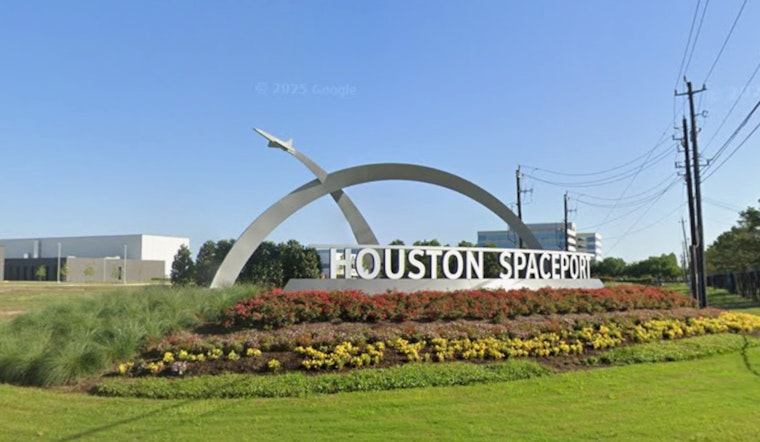
Heavy machinery is rolling at the Houston Spaceport as Venus Aerospace kicks off a new rocket engine test range and the city pushes ahead with a taxiway that will tie the growing campus directly into Ellington Airport. It is the latest turn in a decade-long effort to turn Ellington into a working hub for building and testing lunar landers, spacesuits, and hypersonic propulsion. City and industry leaders say the current construction wave is about more than shiny hardware, arguing it will deepen Houston’s aerospace supply chain and keep more high-wage jobs anchored in the southeast side.
Venus Aerospace Builds A Rotating-Detonation Test Range
Venus Aerospace is adding what officials describe as a rotating-detonation rocket engine (RDRE) testing range on land next to the spaceport, according to KHOU. The company’s project landed a Space Exploration & Aeronautics Research Fund grant of up to $3.9 million from the Texas Space Commission, and the commission’s release lays out roughly three years of work that start with site prep and end with a fully outfitted test complex.
The schedule shows infrastructure work running through December, followed by IT and equipment installation that stretches into mid-2026. In other words, crews are expected to move from dirt work to high-tech gear over the next couple of years as Venus builds the kind of on-site test environment that serious propulsion programs require.
Spaceport Momentum And Dollars
Houston Airports materials state that the Spaceport has already helped attract more than $10 billion in aerospace contracts. Agency studies cited by the airport system say Ellington supports thousands of jobs and roughly $2 billion a year in regional economic output, numbers officials have been repeating as they make the case for continued buildout.
Houston Airports Director Jim Szczesniak leaned on those figures in his Dec. 4 State of the Airports address, telling his audience, “Houston Airports generates $40.6 billion in economic activity for this region and supports more than 207,000 jobs,” as he argued for more infrastructure investment. City leaders say the strategy is straightforward: combine federal, state, and local backing so that early technical wins from companies like Venus can harden into a durable industrial cluster. To that end, the airport system has been publicly touting both the contract totals and the regional economic numbers in recent releases.
Taxiway To Open Up Airside Access
On the ground, a lot of that strategy hinges on Taxiway Lima, the roughly two-mile connector that will give Spaceport tenants airside access to Ellington’s runways and free up additional developable land. ABC13 reported that the City Council approved the project’s initial phase in March 2024, and the council later signed off on a construction contract of about $20 million to advance the next segment, according to local reporting and airport documents.
Officials describe a staged build that moves from design work to runway connectors and then to the final taxiway buildout. The goal is to create a layout that can support horizontal test flights and make it easier for manufacturers and launch vendors to move hardware, people, and parts in and out of Ellington.
Why The Engine Tests Matter
Venus’s rotating-detonation milestones jumped onto the national radar after a May flight test that local reporters say proved the technology outside the lab and helped boost interest from investors and government customers. The Houston Chronicle detailed that May RDRE flight and Venus’s plan to scale the engine for runway-launched hypersonic systems, a context that helps explain why the company is putting permanent test infrastructure near Houston instead of keeping everything in a wind tunnel or far-off range.
Combined with grant support from the Texas Space Commission, the new test range is framed by officials as a way for Houston to turn propulsion breakthroughs into local jobs, supplier contracts, and follow-on work that might otherwise land in another state.
Timeline And Local Impact
Planning documents and industry coverage suggest that major portions of the taxiway and spaceport upgrades will come online over the next 12 to 18 months, with full airside improvements potentially running into 2026. Engineering News-Record notes that the entire Taxiway Lima program is likely to be a broader, multi-phase effort, with substantial pieces financed by Federal Aviation Administration grants even as the city moves specific construction contracts forward this year.
For nearby neighborhoods and businesses, that translates into months of active construction and a longer wait-and-see period on how quickly the promised aerospace jobs materialize.
Venus Aerospace’s on-site test range and the Taxiway Lima project are currently the most visible signs that Houston’s space ambitions are shifting from visionary renderings to heavy infrastructure. Over the next year, officials and industry watchers alike will be tracking whether that mix of private research and development and public spending grows into a lasting wave of jobs, suppliers, and test activity out of Space City.





