

























































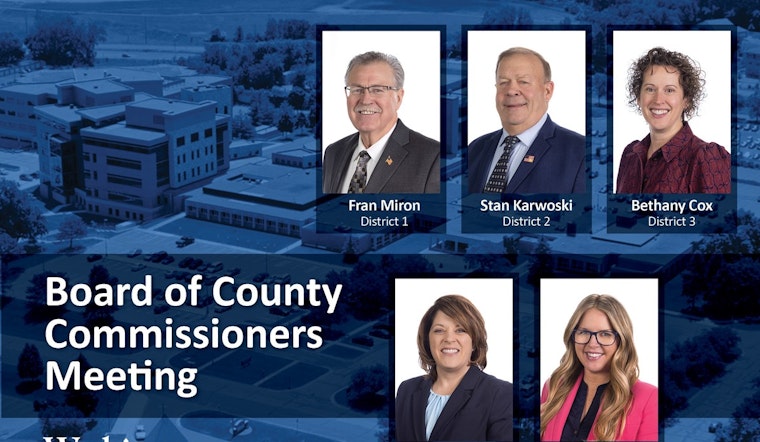
In a move that signals attention to growth and community needs, the Washington County Board of Commissioners made several key fiscal decisions for the upcoming year during their session last Thursday. Among the notable actions was the approval of the county’s 2026 property tax levy and budget, setting the levy at $150,162,700, maintaining the rate endorsed in their September meeting.
The budget, complete with its certified property tax levy, marks an increase of 6.95% from the previous year, tagged as the metro area's lowest county levy increase. Households can expect a modest hike in their property tax bill, with increments ranging from $31 for homes valued at $330,000 to $58 for properties at the $550,000 mark. Across the county, the investments for 2026 will be distributed among operating expenses, capital investments, and service of debt, according to Washington County's official announcement.
Infrastructure remains a priority, as the commissioners also greenlit the five-year Capital Improvement Plan (CIP), outlining an ambitious $493.8 million blueprint for development. This plan is slated to impact roads, libraries, parks, and other public facilities, ensuring that residents reap the benefits of a safe, modernized environment. The allocation is not only immense in scope but deliberate, as testified by the meticulous workshops that led to its finalization.
Efforts to ensure the well-being of all county residents extend beyond brick-and-mortar projects. The state’s contribution via the Local Affordable Housing Aid will fuel homelessness prevention services, thanks to contract extensions with the Community Action Partnership of Ramsey and Washington Counties and Solid Ground. Furthermore, over 2,500 individuals in need of case management will continue to receive services through extensions with agencies such as Country Services Inc. and Shakir Consulting Services. Despite facing inflationary pressures and federal cost shifts, the county diligently sustains a staffing ratio of five employees per 1,000 residents as confirmed by Washington County's administrative communications.
Complementing these fiscal measures, the board enacted appointments and reappointments to various advisory boards spanning community corrections, mental health, and parks and open space, ensuring that diverse perspectives remain at the heart of governance. Additionally, with an eye on future sustainability, agreements have been secured to maintain the low-interest loan program for residents upgrading non-compliant septic systems and wells.
In tackling ecological concerns, the county hasn't turned a blind eye, accepting over $143,000 in funds from the Minnesota Department of Natural Resources to combat aquatic invasive species. Against the backdrop of a dynamic county confronting new challenges, the commissioners show a resolve to merge fiscal responsibility with forward-thinking community enrichment.




