

























































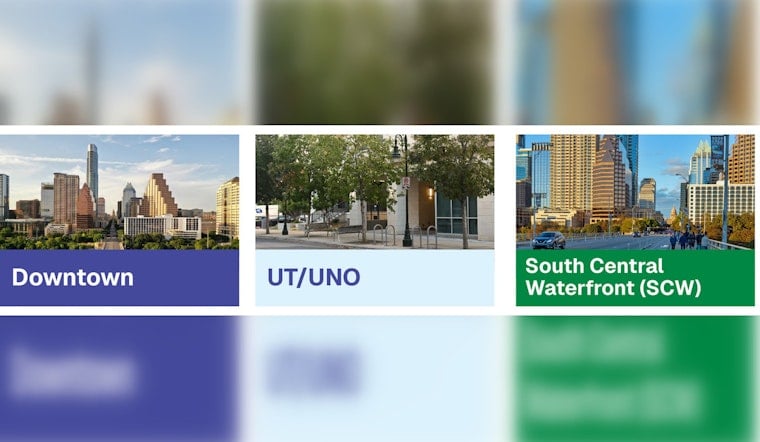
Austin is lining up a sweeping reset for its urban core, tying together the University of Texas' West Campus, downtown, and the former Austin American-Statesman site on the lakefront under a single playbook. City planners have rebranded an update to the decade-old Downtown Austin Plan as the new Central City District Plan, folding downtown, the South-Central Waterfront, and West Campus into one blueprint that is expected to guide zoning, public projects, and the public realm as major infrastructure and transit work comes online.
Commission backing and how the idea took shape
The push to knit these pieces of central Austin into one district grew out of a staff recommendation and a series of commission votes that favored a broader, district-level strategy. The Downtown Commission formally urged expanding its own boundaries and responsibilities to cover West Campus and the South-Central Waterfront, according to Downtown Commission documents. In that recommendation, commissioners asked City Council to amend the commission's bylaws so it could help shepherd the larger plan as it advances.
What the plan covers and when to expect it
The proposed Central City District would stretch roughly from Lamar Boulevard to I-35 east-west and from Dean Keeton/29th Street down to Bouldin Creek north-south, pulling the University of Texas, downtown, and the lakefront waterfront into one planning area. Phase I public engagement ran this fall with open houses and an online survey, while Phase II outreach is scheduled for early 202,6, and a draft plan is slated for City Council consideration in December 2026, according to the City of Austin. Staff materials describe a phased engagement calendar and an implementation program that would follow adoption.
Why city planners say one blueprint is needed
City planners point to big-ticket projects like Project Connect light rail, the I-35 reconstruction, and convention center improvements as proof that old neighborhood lines are already blurring and that coordinated land-use, mobility, and public-space strategies are needed. A city memo and staff presentations cast the district update as a way to tie transit, trails, and redevelopment into a single code-and-investment playbook, as reported by the Austin Monitor. The update is expected to deliver a place-types map, implementation steps, and near-term "quick win" projects alongside longer-term code revisions and funding changes.
Reaction: opportunity, and a dose of skepticism
Council member Zo Qadri has described the new district effort as “a key opportunity” to influence how Austin's central city grows, according to Community Impact. But some in the development world are not convinced the city can execute on something this sprawling. A prominent real-estate attorney told the Austin Business Journal that Austin's track record suggests it may struggle to deliver on a plan with this many moving parts. On the district's southern edge, the 18.9-acre Statesman site on Lady Bird Lake has already been a flashpoint, landing in court and seeing temporary industrial use, according to the Austin American-Statesman.
What's next and how to follow the work
City staff plan targeted subarea engagement in early 2026, focusing on the University Neighborhood Overlay, downtown, and the South-Central Waterfront, followed by stakeholder advisory meetings and a final adoption push next December, according to the city's project materials. The Central City District project page includes meeting summaries, schedules, and a contact email for the planning team. For detailed timelines and documents, visit the City of Austin.





