

























































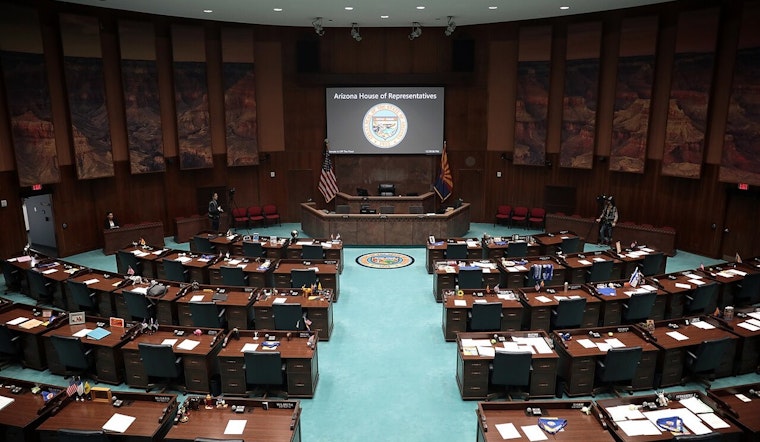
Arizona's Governor Katie Hobbs is taking serious heat for her rapid veto of a Republican tax plan, putting state taxpayers in a bind. As reported by the Arizona House of Representatives, Governor Hobbs' actions have sparked a deadline-driven concern for citizens, with tax filing season hard upon them. The GOP tax relief proposal included eliminating taxes on tips and overtime, increasing the child tax credit, simplifying filing for small businesses, and providing deductions for childcare and retirement income. To return $1.1 billion to taxpayers over three years, the plan was positioned as a lifeline amid soaring living costs.
Yet, by the early morning of a Friday, Governor Hobbs had shot down this proposal, only to propose a budget, by lunchtime, packed with $650 million in new taxes and fees. It's worth noting, while we're on the topic, that House Speaker Steve Montenegro stated the Republican plan "helps workers," "helps families," "helps small businesses," and "helps seniors." But Montenegro contends that Governor Hobbs's budget suggests her preferences align elsewhere. With the Arizona Department of Revenue already having distributed tax forms, taxpayers now face a three-month deadline to square up with the state, using forms that may not reflect the most current — or contentious — fiscal policy.
In an intriguing twist, the present tax forms include a state and local tax (SALT) deduction that seems to favor the wealthier tier, a provision Democrats and Governor Hobbs have publicly criticized. Republicans intended to remove this benefit in their tax relief proposal, offering instead expanded child tax credits and new deductions for childcare. "House Republicans want Arizonans to live well. Governor Hobbs wants the government to live well," the Speaker alleged, intensifying the standoff between the Governor's office and the Legislature.
In a vivid illustration of the political tug-of-war, Montenegro accused the governor of creating the ensuing chaos. Writing about the veto, he stated, "The chaos ahead is entirely of Hobbs’ making." Now, as Arizonans grapple with the discrepancies between past promises and present policies, the governor appears cornered by a narrative that pits her alleged advocacy for affordability against actions taken once in office.
The debate is far from over, and the coming months are sure to be littered with more political sparring as Arizona's leaders tussle over tax conformity and the state’s financial future. With the taxpayer's well-being ostensibly at the core of this struggle, the clock is ticking for the state government to reconcile its divided stance and deliver a plan that both addresses the affordability crisis and meets the immediate needs of its citizens.





