

























































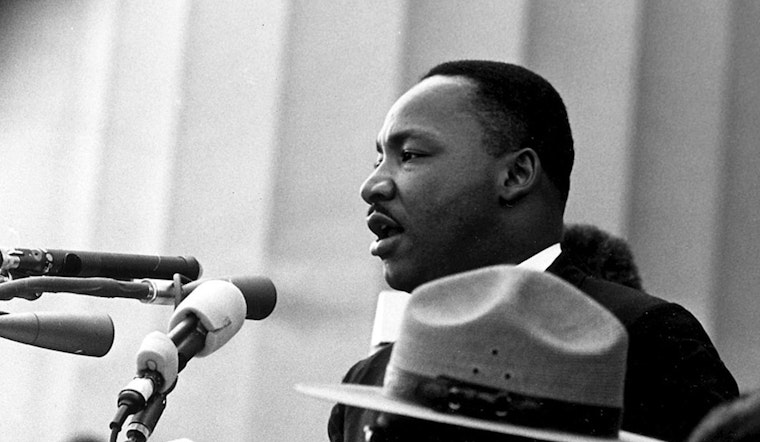
Chicago's remembrance of Dr. Martin Luther King Jr. this year carried a strikingly contemporary resonance, as city leaders linked King's legacy with current immigration policies under the Trump administration. Mayor Brandon Johnson and other officials used MLK events as platforms to denounce recent actions by federal immigration agents, particularly citing the shooting of Renee Good in Minneapolis and a raid that led to the capture of Venezuelan President Nicolás Maduro. "We're also seeing the tragic events and injustices that are happening across this country. A Minneapolis woman was shot in cold blood," Johnson stated in his speech, as relayed by NBC Chicago.
At the 2026 Rainbow PUSH MLK Annual Breakfast, Don Lemon headlined, emphasizing the importance of embracing King's nonviolent philosophy amid these tensions. In a sentiment expressed by, Lemon and quoted by Chicago Sun-Times, he felt that "America feels different, the world feels different," and underscored that Dr. King's words have never been so critical. U.S. Representative Jonathan Jackson, echoed these thoughts at the breakfast, which also served to honor his father, the Reverend Jesse Jackson.
"Renee Good should be alive today. There was no good reason for the Immigration Customs and Enforcement Agency to confront an American citizen," Jackson declared. Moreover, former Mayor Rahm Emanuel spoke at the City Year MLK Day of Service, calling for an overhaul of the Immigration and Customs Enforcement (ICE), likening its operatives to a "lawless mob" rather than a law enforcement agency. In a thorough critique, Emanuel pointed out, "They're wearing masks to cover their identity. They have no name ID. They have no body camera. They have no training," according to NBC Chicago.
The theme of "building a beloved community" resonated throughout the events, as city leaders, such as Illinois Attorney General Kwame Raoul and U.S. Senator Tammy Duckworth, urged attendees to reflect on King's message in relation to present-day issues. Johnson made a pointed call for the application of King's principles in policy-making, not just in ceremonial remembrance. "It's not just to honor and remember his words, it's about the manifestation of those words being codified in policy," Johnson emphasized, per an interview with Chicago Sun-Times.



.jpg)