

























































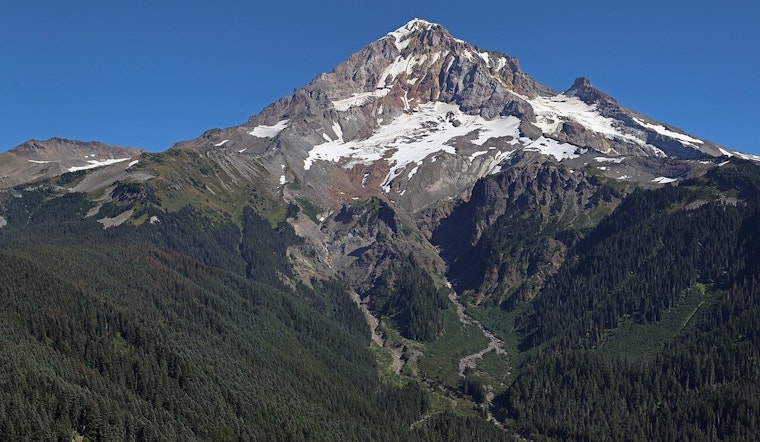
A climber was killed Sunday on Mount Hood after an estimated 300-foot fall near the upper crater area known as Devil's Kitchen, authorities said. Witnesses reported seeing the fall in the high alpine basin, and when rescuers reached the site, they found the climber dead amid harsh winter conditions. Volunteer mountain rescuers and wilderness medical teams handled the recovery.
According to OPB, the Clackamas County Sheriff’s Office said witnesses saw the fall just before 10 a.m. and estimated the drop at roughly 300 feet. The sheriff’s office has not released the climber’s name or additional details about the incident. Portland Mountain Rescue and American Medical Response’s Reach & Treat team were credited with assisting the recovery, the outlet reported.
Rescue response
Volunteer teams with technical rope and high-angle skills typically lead evacuations from Hood’s upper slopes, and Portland Mountain Rescue is often the sheriff’s go-to organization for those missions. The American Medical Response Reach & Treat unit, a specialized wilderness paramedic team, also helped on the mountain, according to local reporting and organizational histories. Those teams are trained to stabilize patients in place and carry out multi-hour evacuations when helicopter or vehicle access is not possible.
Devil's Kitchen and the mountain's hazards
Devil’s Kitchen, the Hogsback and Crater Rock are among the steep, technical sections of Mount Hood where ice, loose rock and volcanic fumaroles turn a single slip or a failed self-arrest into a major emergency. The U.S. Forest Service notes there are no hiking trails to the summit and warns that the routes require mountaineering gear and skills. An analysis by the American Alpine Club also emphasizes that many serious accidents occur on descent, when climbers are tired and snow conditions can change quickly.
What climbers should know
Before heading for the summit, climbers should check avalanche and mountain weather forecasts from the Northwest Avalanche Center and confirm current route conditions at Timberline and other staging points. Experts recommend carrying and practicing with crampons and an ice axe, traveling with experienced partners or a guide, and using locator devices so rescuers can pinpoint a party’s location if something goes wrong. In an emergency, call 911 and give the most specific location possible to help search and rescue coordinators.
This story will be updated if the sheriff’s office or rescue organizations publish additional information or a formal news release. For now, officials have shared only the basic circumstances as teams complete the recovery and any follow-up work.



