

























































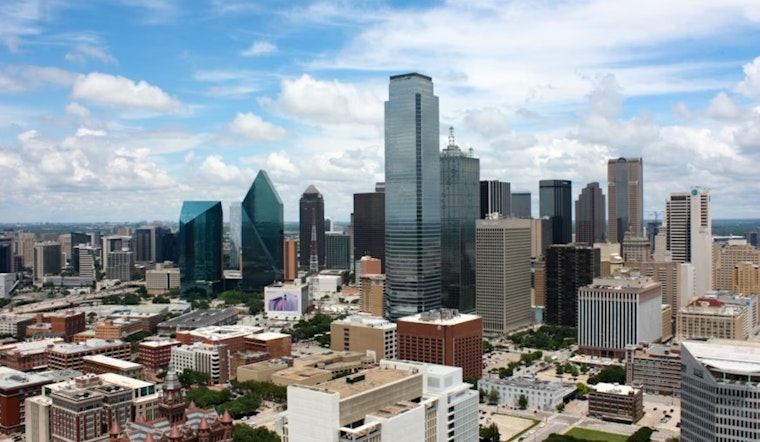
Crane counts and truck traffic did not take a holiday in Dallas and Houston. After a torrid 2025, the two metros rolled straight into 2026 controlling roughly one-fifth of all active industrial construction in Texas, as developers kept pouring concrete for massive logistics projects in speculative parks and around key airports.
Developers across both regions pushed dozens of large-format warehouses into the ground last year, much of it without tenants locked in. That speculative streak has kept local permitting counters busy and helps explain why these two markets are still sprinting while others around the country are catching their breath.
According to CoStar, Dallas and Houston combined for roughly 62 million square feet of industrial starts in 2025 and now account for about 20% of the state’s industrial construction pipeline. Much of that volume came from speculative development, a key reason these two Texas hubs stand out even as other metros pulled back. Analysts say the wave of starts reflects strong logistics demand tied to the Port of Houston and the Dallas-Fort Worth region’s role as a national distribution workhorse.
Nationally, new industrial groundbreakings have cooled and the U.S. construction pipeline has thinned, according to Cushman & Wakefield. Texas is the outlier. Data from CBRE shows Houston and Dallas among the markets with the largest pipelines, a contrast that has concentrated construction activity inside state lines and left developers in the two metros more willing to finance speculative projects than counterparts in many other regions.
Big speculative projects underway
A handful of mega-bets are anchoring that speculative surge. On the Dallas side, Trammell Crow Company has started construction on Passport Park West, a seven-building, 2.7-million-square-foot industrial park at Dallas-Fort Worth International Airport. In a press release, Trammell Crow Company called it “one of the largest speculative industrial projects to start in the U.S. over the past year.”
Down in the Houston area, Union Pacific is lining up its own jumbo play: a 2,040-acre Mainline Texas Industrial Park near Rosenberg that could eventually support more than 20 million square feet of rail-served industrial space, according to the Houston Chronicle. If built out as envisioned, it would give the region a sprawling logistics hub tied directly into the national rail network.
Market signals: vacancy, rents and leasing
The numbers on the ground show supply finally starting to catch up with demand in some corners. In Houston, data from Matthews put vacancy at roughly 7.4% in the third quarter of 2025, with about 21.1 million square feet under construction. Larger speculative buildings are taking longer to lease, a sign that tenants have more options and can shop around.
The Dallas-Fort Worth market is carrying its own heavy construction load. The Federal Reserve Bank of Dallas reported roughly 15.4 million square feet under construction in mid-2025, and vacancy has drifted into the high single digits as a wave of completions hit the market. For a region used to near-instant absorption, that is a subtle but important shift.
Developers' bets and risks
Developers’ appetite for speculative space is increasingly selective. Colliers’ Houston reporting notes that while construction has surged, prelease rates on many new projects remain low, leaving landlords at risk if big users delay or rethink expansion plans. That is turning some of the most aggressive projects into longer-duration bets rather than quick flips.
On the national stage, Cushman & Wakefield finds builders leaning more toward build-to-suit and preleased deals as lenders tighten requirements. Tougher financing could slow the next wave of speculative groundbreakings, particularly in markets that are already digesting a lot of new space.
For tenants and cities, the big storyline in 2026 is simple: how fast will this new product be absorbed, and will rents hold the line in markets that have been building at full speed. Developers, municipal planners and logistics operators will be closely tracking prelease rates, borrowing costs and major infill projects, key indicators highlighted in industry outlooks from CBRE, to gauge whether Texas keeps leading the industrial cycle or has simply pulled a lot of future supply forward into what could turn out to be a slower year.





