

























































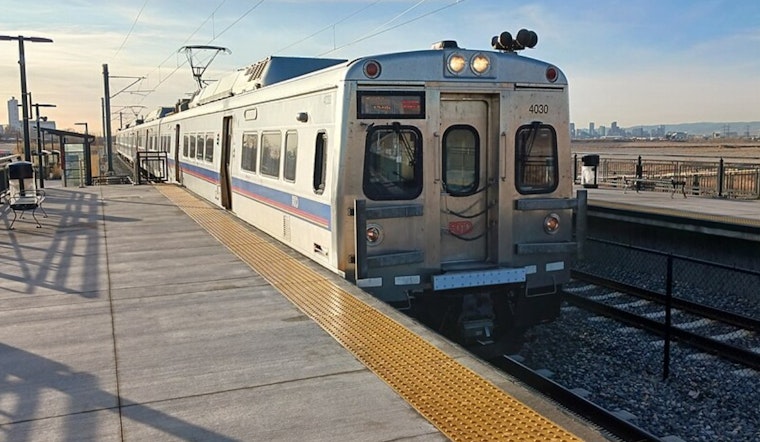
Colorado’s long-talked-about Front Range train is edging off the drawing board and into the ballot box. State and regional planners are weighing a November question for Front Range voters that could bankroll an intercity “starter” rail line between Denver and Fort Collins while a bigger system is still on the workbench. The technical homework is mostly done; the harder part now is political: who pays, how much service riders actually get, and whether skeptical voters are ready to sign on.
As reported by The Denver Post, the Front Range Passenger Rail District and state transportation leaders are preparing to ask voters in 13 Front Range counties to approve a ballot measure this November to fund passenger rail. The district’s long-range plan envisions as many as 10 daily round-trip buses stretching from Fort Collins all the way to Trinidad. For now, though, the working strategy is to phase it in, starting with a narrower Denver-to-Fort Collins “starter” line that can prove the concept and, planners hope, build public enthusiasm for the full buildout.
What The Starter Service Would Look Like
The Front Range Passenger Rail District’s March 2025 preliminary alternatives analysis sketches out several versions of the future system, including a lower-frequency “joint service” starter alongside more robust long-term options. Each scenario comes with its own menu of track, siding, and station upgrades that would be needed to get trains rolling. The study points to a higher-frequency alternative as the preferred end goal, but it also lays out a leaner starter version that could launch sooner while bigger investments wait in the wings.
Those scenarios, as summarized in the FRPR work, include capital and operating estimates that planners say are still subject to refinement as engineers sharpen cost assumptions and negotiate limits with the host freight railroad. The detailed technical story on proposed schedules, infrastructure, and expected performance is in the FRPR preliminary analysis.
How Officials Expect To Pay For It
State lawmakers in 2024 created two new revenue streams: a congestion and rental-car fee, and a fee tied to oil and gas production. Planners say these could cover a meaningful share of near-term costs, but not the entire package.
Reporting from Colorado Newsline outlines the current math. Under certain allocation assumptions, those fees might generate roughly 40 to 45 million dollars a year. That still leaves an annual shortfall that the analysis suggests would need to be filled by RTD or other partners, using either cash contributions or in-kind support. Whether RTD is willing to step in for that role, and on what terms, is shaping up as one of the pivotal questions before any ballot language is locked in.
Track Access Remains The Wild Card
Even if the money lines up on paper, the whole plan still lives or dies on one stubborn variable: track access. Much of the proposed corridor is owned by a freight railroad, so any passenger service depends on a negotiated sharing deal.
To streamline that process, the Governor’s office and partner agencies adopted an intergovernmental agreement in 2025 to coordinate negotiations and pursue a single access agreement. Gov. Jared Polis has pointed to that framework as a reason a January 2029 launch date is feasible. The big unknown is what BNSF will demand in return, both for access and for the infrastructure upgrades it wants along the corridor. Until those terms are nailed down, planners say the real timeline and true costs are still only estimates. The state’s interagency step is outlined in a statement from the Colorado Governor's Office, while KUNC lays out the broader negotiation dynamics.
What Happens Next
For now, the action is in boardrooms rather than on platforms. The rail district and its partners still need to refine capital cost estimates, finalize key interagency agreements, and then decide if they are actually ready to ask voters for a new tax or other funding measure this November.
RTD board members have signaled they will weigh a possible funding role this spring. That decision could effectively greenlight or stall a ballot push. At the same time, the Front Range Passenger Rail District is keeping up its public outreach as the service development plan moves toward completion.
Why It Matters Locally
Planners say a well-run corridor could attract hundreds of thousands of riders each year, depending heavily on how often the trains come. Communities from Westminster and Broomfield up through Boulder, Longmont, and Fort Collins are watching closely, since many of the needed upgrades would land in their backyards.
The preliminary analysis shows ridership climbing sharply with more frequent service. The higher-frequency options yield far more annual trips, while the pared-down starter is framed as a proof-of-concept that shows what the corridor can do and sets the stage for later expansion. For voters and local leaders, the looming question is whether the long-term promise of a Front Range rail spine is worth the near-term cost and political friction that will come with putting it on the ballot.





