

























































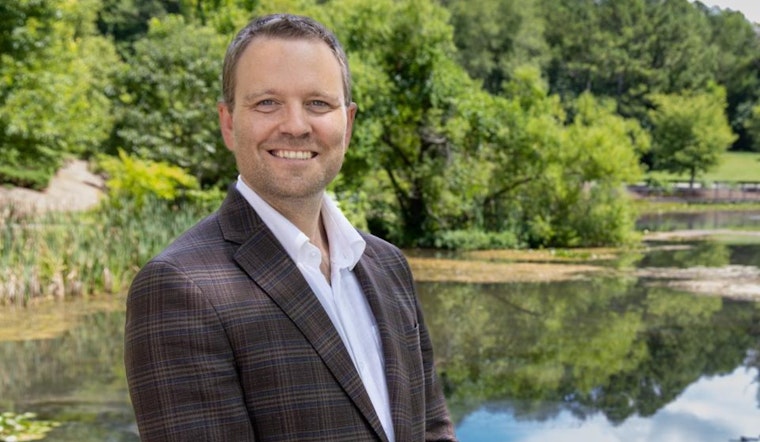
Sean Turner, a senior engineer at the Department of Energy's Oak Ridge National Laboratory, is making strides in the energy sector by employing artificial intelligence to better understand and manage water resources. His innovative work focuses on enhancing the reliability of nuclear and hydropower operations—a timely pursuit given the nation's surging demand for energy, according to Oak Ridge National Laboratory.
Turner's expertise lies in the development of hydrology models; his recent work utilizes large sample deep learning neural network models to predict the impact of rising water temperatures on the Tennessee Valley Authority's power production. These models are capable of simulating the behavior of water despite the limited availability of comprehensive river temperature data across the United States. "Water temperatures are important to the operation of nuclear power plants in the region, which need an adequate supply of cool water from hydropower dams further upstream,” Turner said. “If the water temperature is too high, this process becomes less effective." With ORNL’s supercomputing facilities, Turner and his team can now model water temperature fluctuations in any of the 2.7 million stream reaches in the lower 48 states, as per the ORNL website.
A Scotsman by origin, Turner's journey in environmental engineering began in his home country, his choice of career no doubt influenced by his upbringing in Bridge of Weir, a town whose existence was inextricably linked to the harnessing of waterpower, he earned his engineering and environmental design degree from the University of Glasgow before diving into the industry and academia, culminating in an engineering doctorate program at Cranfield University with a focus on drought risk for United Utilities.
With a career that spans multiple continents and sectors, Turner eventually moved to the US, where he has been applying his hydrology insights to tackle practical problems, according to Turner, the marriage of river operation models with those simulating the US power grid could revolutionize the management of hydroelectric resources, increasing the reliability of the country's power grid— and with these models, "These large sample approaches are transformative for hydrology, and we haven’t tested them to the limits yet" he said, looking ahead, Turner also sees potential in supporting new power plant site decisions with the help of these revolutionary deep learning tools, as noted by Oak Ridge National Laboratory.
In a stance supportive of transparency and collaboration in science, Turner is a proponent of open research, he consistently publishes papers that include all data and calculations necessary for replication of his work, and he advocates for the importance of adapting to new technologies, "It’s important to be able to use the latest tools to stay up to date," Turner expressed in his interview with Oak Ridge National Laboratory. His work offers a glimpse into the future of energy production, where the careful synergy of AI, environmental data, and infrastructure can lead to more sophisticated and sustainable energy solutions.





