

























































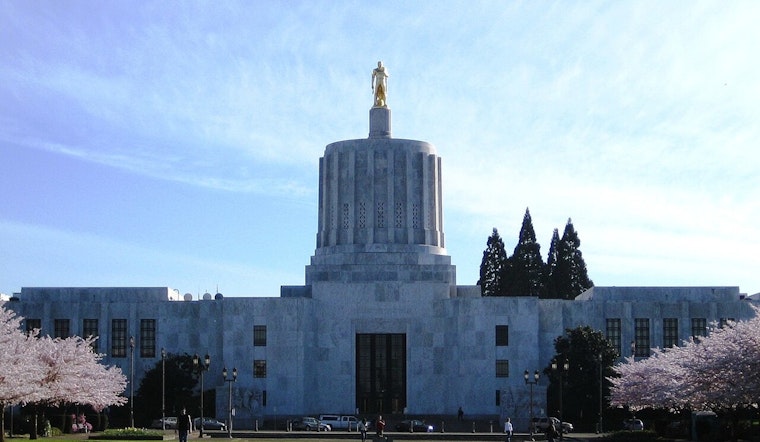
A nearly century-old attorney general opinion has suddenly jumped back into Oregon politics and could blow up Gov. Tina Kotek’s plan to repeal House Bill 3991. Kotek has asked lawmakers to scrap the transportation package after opponents gathered enough signatures to pause new gas taxes and higher DMV fees. The old legal reading is now a fresh obstacle just as Oregon races to plug a growing funding hole at the Department of Transportation.
Old Ruling, Fresh Headache
The opinion, written by then attorney general I.H. Van Winkle on Nov. 13, 1935, concluded that lawmakers could not nullify a statute once citizens had successfully referred it to the ballot. That reading, recently resurfaced in news coverage, is now being wielded by referendum backers as a legal barrier to repeal, according to Oregon Journalism Project.
Kotek publicly urged repeal in early January, arguing that scrapping HB 3991 would let lawmakers "redirect, repeal and rebuild" a different funding plan without sending the contested taxes to the November ballot. The petition drive led by "No Tax Oregon" turned in enough signatures to pause the bill’s main revenue changes, including a 6 cent gas tax increase, higher title and registration fees, and a temporary increase to the transit payroll tax. Oregon Capital Chronicle reported on the governor’s reversal and the political calculations behind it.
Legal Split Over Who Gets The Last Word
The Legislature’s top lawyer, Dexter Johnson, issued a Jan. 9 memo concluding it is "likely" the Legislative Assembly can repeal HB 3991. He reasoned that courts have treated the Legislature and the people as "coordinate legislative bodies." That view, plus a 1986 Court of Appeals decision (Martin v. Ervin) that allowed repeal in a different context, sits in direct tension with Van Winkle’s 1935 conclusion and leaves real uncertainty about how courts would rule. As OPB outlined, the split has lawmakers, the secretary of state and the attorney general all weighing competing legal signals.
The Oregon Department of Justice says it is aware of the 1935 opinion but has not yet analyzed whether Van Winkle’s conclusions still hold in light of later constitutional amendments and case law. "We have not analyzed whether the 1935 opinion’s conclusions remain valid," DOJ spokeswoman Jenny Hansson told Oregon Journalism Project, adding that the office will review the issue before offering formal guidance. That pending review is one of the key reasons legislative leaders have tread carefully in public comments.
Senate Republican Leader Bruce Starr, a chief petitioner on the referendum, called the 1935 opinion "unmistakably clear," arguing that the Constitution requires a vote and that a repeal attempt would "censor" voters. Other Republican leaders at the Capitol have echoed Starr’s stance, saying any legislative repeal would short circuit the people’s right to decide. KATU captured those reactions and the back and forth at the statehouse.
ODOT’s Budget On The Bubble
The practical stakes are immediate. ODOT officials and legislative analysts say the department faces roughly a $242 million shortfall in the 2025-27 budget cycle if the new revenues remain suspended. Agency briefings have outlined potential cuts that include eliminating vacant positions, laying off hundreds of workers, trimming road maintenance and slowing winter storm responses if replacement funding is not found. Oregon Capital Chronicle reported on ODOT’s numbers and the scenarios officials have sketched for lawmakers.
The clock is tight. Elections officials are still verifying petition signatures while lawmakers head into a short February session with limited time to act. If the secretary of state or the Legislature moves to remove the referendum or to repeal the law, lawsuits are likely and a court test could decide whether the 1935 opinion, more recent appellate decisions, or statutory interpretations prevail. For now, agencies and legislators say they are waiting for formal legal guidance from the Department of Justice and, potentially, the courts, while KPTV has outlined what ODOT says could change if the pause on the law sticks.





