

























































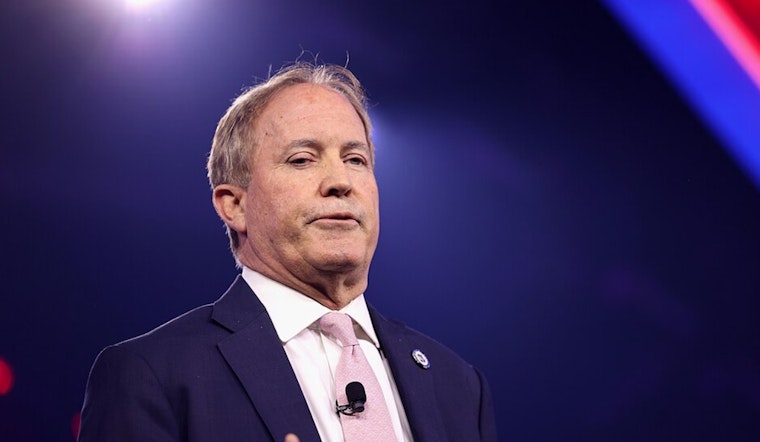
El Paso leaders are sounding the alarm this week, arguing that Texas Attorney General Ken Paxton's push to make large counties hand over detailed prosecutorial records looks targeted and would drain local resources. The dispute, now tied up in multiple lawsuits, has put El Paso officials on a collision course with the state's top law enforcement office as courts decide whether Paxton can force the disclosures.
Local officials raise privacy and workload alarms
El Paso County Attorney Christina Sanchez told ABC-7 she worries the rule is politically aimed at urban counties and could expose sensitive information about migrant and mixed-status families. El Paso District Attorney James Montoya said the mandate would pull staff away from core criminal work and bury his office in paperwork.
The counties’ lawsuit estimates El Paso alone would need about 12,000 man-hours to compile the requested data, while Travis County could face more than $3 million in fees to comply. As reported by KVIA, Montoya said his office would feel a similar hit.
What the rule would do
The rule, adopted as Chapter 56 in the administrative code, would require district and county attorneys in counties with populations above roughly 400,000 to file quarterly reports and turn over broad categories of case materials to the Attorney General’s Office. Plaintiffs say it would also create an oversight advisory committee with the power to demand entire case files and potentially label noncompliant prosecutors as committing “official misconduct,” which could expose them to removal from office.
The background of the regulation and the related legal challenges are detailed by The Texas Tribune.
Lawsuits and legal roadblocks
Multiple urban prosecutors, including officials from El Paso, Travis, Harris, Bexar, and Dallas counties, filed separate suits in May arguing that Chapter 56 goes beyond Paxton’s authority and would be administratively crippling for their offices. A Travis County judge issued a temporary injunction in June 2025 that paused enforcement, and the case has since bounced around the state courts as the plaintiffs push for a permanent block.
KERA has outlined which prosecutors joined the litigation and why local officials decided to take the matter to court.
Paxton's stated aim and response
Paxton has defended Chapter 56 as a transparency tool meant to “rein in rogue” prosecutors, and his office told state regulators that the fiscal impact on local governments would be “minimal, if any.” Supporters argue the new reporting would help citizens judge how well local prosecutors are doing their jobs. Opponents counter that Paxton does not have statutory authority to impose these demands in the first place.
The attorney general’s stated rationale is laid out by The Texas Tribune.
Why El Paso leaders are worried
El Paso officials say their unease is heightened by Paxton’s recent legal actions against migrant-serving organizations, which have already made local leaders wary of broad state demands for files and communications. Sanchez has warned that mixed-status families and crime victims could be exposed if sensitive records are pulled into a statewide review, a concern spelled out in local court filings.
That context is explored in reporting from El Paso Matters.
Legal implications
At the center of the lawsuits are separation-of-powers and privacy arguments. Plaintiffs say the 1985 statute Paxton cites does not give the Attorney General power to micromanage independently elected prosecutors, and that complying with Chapter 56 would divert staff time and money away from prosecutions. Judges considering the challenges have flagged the heavy administrative burden and privacy risks, sending portions of the dispute back to lower courts for more detailed review.
A public radio explainer from Texas Public Radio describes how the fight could reshape the balance of power between the Attorney General’s Office and local prosecutors.
The litigation is still unfolding and could decide whether the state can force a limited group of large counties to turn over sweeping sets of prosecutorial data. ABC-7 sought comment from Paxton’s office and, according to KVIA, officials did not respond by publication time.





.jpg)