

























































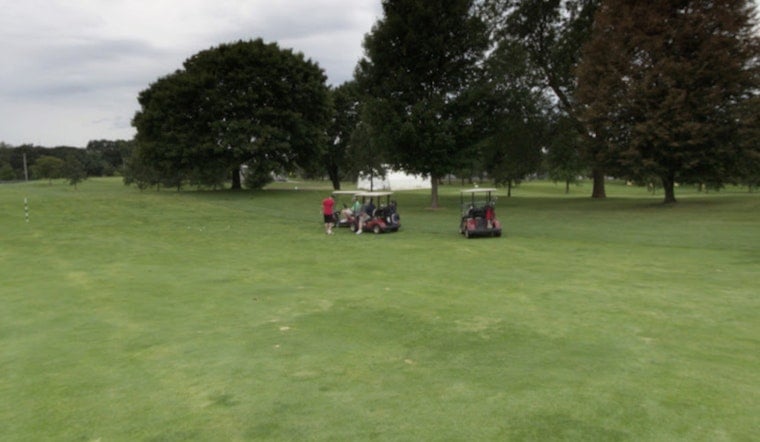
The University of Minnesota’s move to sell the Les Bolstad Golf Course has kicked off a neighborhood-scale fight over what should rise on roughly 141 acres just north of the St. Paul campus. On a frigid Friday night, residents, planners and advocates squeezed into Falcon Heights City Hall to swap sketches and big ideas, ranging from two to four story “missing middle” housing to district geothermal systems and larger public green spaces. If the sale goes through, the land will shift from university ownership into the city’s zoning framework, setting up a months-long run of studies, developer proposals and public hearings.
What happened at the meeting
About three dozen people turned out for the Jan. 22 public meeting to map options and press officials on priorities, according to MinnPost. Planners backing medium-density, two to four story housing shared the floor with neighbors arguing for larger swaths of open space and a system of connected trails. Rep. Larry Kraft raised alarms about how far public dollars can stretch, telling the room “we can’t subsidize our way out of this,” while advocates pushed for networked geothermal and other climate-forward infrastructure to be baked into any plan from day one.
The university’s timeline and what’s for sale
The University of Minnesota has told the Board of Regents it intends to dispose of the golf course property “as-is,” roughly 140.9 acres on both sides of West Larpenteur Avenue, and that the John W. Mooty training facility, Elizabeth Lyle Robbie Stadium and the KUOM radio tower are not included in the sale, according to the University of Minnesota. A formal RFP process went online in 2025, and the Falcon Heights website notes that the RFP was posted Oct. 15, 2025, with offers solicited through the university’s bidding system. Under city guidance, once the parcel is privately owned it will fall under Falcon Heights zoning, which will govern allowable uses and parkland dedications.
Missing-middle models and local scale
Meeting advocates pointed to “missing middle” housing, including cottage courts, duplexes, fourplexes and low-rise townhouses, as a way to add homes without jumping to high-rise density. As a working example, they cited the Prairie Queen project in the Omaha region, a roughly 50-acre missing-middle neighborhood highlighted by CNU, and compared the Falcon Heights site’s scale to larger Twin Cities redevelopments when talking about how many units the land might ultimately absorb. Proponents argued that a two to four story palette could deliver a range of price points while keeping a human scale and preserving larger, contiguous parkland.
Environmental and infrastructure hurdles
The university says any prospective buyer will need to carry out invasive geotechnical and environmental testing as part of due diligence, with work anticipated to begin in spring 2026 and any remediation overseen as appropriate by state regulators, according to the University of Minnesota. Those investigations matter because the site comes with legacy infrastructure needs and potential soil issues that could drive up cleanup costs; university materials also note that a sale would avert more than $10 million in deferred maintenance that would otherwise be required to keep the course operating. Taken together, remediation, utilities and new roads or stormwater systems are likely to become major line items in any developer’s pro forma.
Legal and zoning notes
If the property sells, Falcon Heights subdivision rules require roughly 8 percent to 10 percent of land in a subdivision to be dedicated as parkland, or collected as a fee in lieu, and the Larpenteur & Snelling Corridor Study the city adopted recommends closer to 18 percent to 22 percent open space. The city has asked the university and potential buyers to weigh those higher targets, according to the city’s project page. Any plan that departs from R-1 expectations will need planning commission review and City Council approval, and the city says it has already worked with the university to set guiding principles intended to steer developer proposals.
Next steps are straightforward on paper: developers will complete bids and due diligence, the university will evaluate offers, and the community can expect more public workshops as concrete proposals surface. For now, the conversation is still an early but high-stakes round of sketching and tradeoffs, centered on the same core questions: how many homes, how much parkland and how much cleanup local taxpayers are willing to tolerate.




