

























































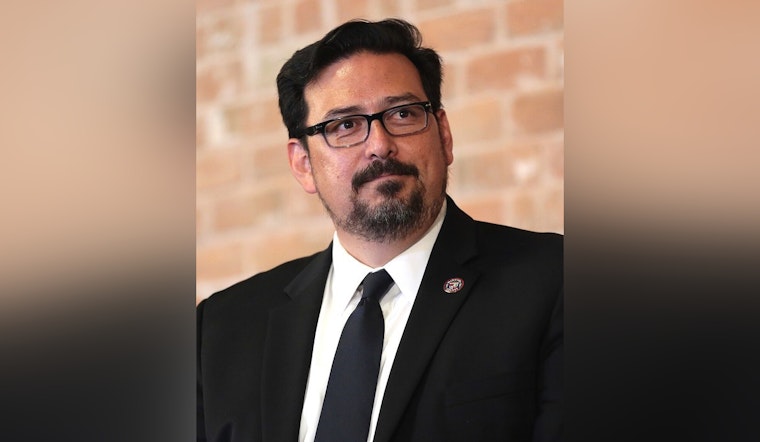
Arizona Secretary of State Adrian Fontes is openly accusing the U.S. Department of Justice of trying to strong-arm his office into handing over a massive cache of voter information, blasting the federal effort as “blackmail” and promising to dig in. He is framing the clash as a fight over privacy and the limits of federal power, arguing that detailed personal data such as full dates of birth and driver's license information are shielded by state law and federal privacy protections. Fontes has told local outlets he would rather defend that position in court than expose Arizonans’ personal details.
In a video segment, Fontes unloaded on the demand, saying, “This isn’t leadership; this is blackmail,” as he criticized Attorney General Pam Bondi’s push for the records, according to FOX 10 Phoenix. His comments track earlier warnings he has issued since the Justice Department first asked for a full, unredacted copy of Arizona’s voter file. Local officials and privacy advocates say the high-stakes fight centers on data that normally is not released in bulk because of how easily it could identify individual voters.
Federal lawsuit and what's requested
The DOJ’s Civil Rights Division filed suit against Arizona in early January after repeated requests for the state’s complete voter registration list went unanswered, according to Courthouse News. In court filings, the department says it needs the information to enforce the Help America Vote Act and the National Voter Registration Act, and that its initial records request went out in July 2025. Those documents and related reporting say the DOJ wants names, birthdates, residential addresses and either driver license numbers or the last four digits of Social Security numbers, all in unredacted form.
Why Fontes says he won't comply
Fontes and other state officials counter that those same data points are protected by state and federal privacy laws, and that turning them over in a bulk file would itself be illegal, according to reporting from KAWC. Fontes has warned that providing complete dates of birth or partial Social Security numbers could open the door to identity theft and fraud for Arizona voters. He has repeatedly labeled the request “unprecedented” and has told local media he would sooner face a court order than voluntarily release the records as demanded.
Who’s pressing and who wants in
The case is already attracting a crowd. Conservative organizations, including the Public Interest Legal Foundation, had previously sued Fontes over access to voter-roll maintenance records, while voting-rights groups have moved to intervene or otherwise push to narrow what can be disclosed, per Democracy Docket. The result is a tangle of outside players with sharply different goals, from expanded public oversight to more aggressive voter list cleaning. Their involvement is turning what might have been a technical records dispute into a broader fight over transparency, privacy and control of election data.
DOJ's stated rationale
The Justice Department maintains that unredacted voter records are essential to checking whether states are following federal list-maintenance rules and to upholding what it calls election integrity, a position described in national coverage of the suit. Attorney General Pam Bondi and Assistant Attorney General Harmeet Dhillon have both described accurate voter rolls as “the foundation of election integrity,” according to reporting that relayed the department’s statement. DOJ lawyers argue that the Civil Rights Act of 1960 and other federal statutes give the attorney general clear authority to demand those records when needed for enforcement.
What's next
The lawsuit is now in federal court, where the timeline could get tight. The DOJ has asked a judge to order Arizona to turn over the records within five days of any ruling in its favor, while Fontes has signaled he will keep refusing unless there are redactions or explicit privacy safeguards, according to local reporting. Courts in other states have already shown skepticism about similar federal legal theories, and Arizona’s case could be headed for higher courts if either side loses at the district level. For now, both camps are gearing up for what looks like a drawn-out fight over how much sensitive voter data Washington can compel states to share.
Fontes’s outspoken resistance has put Arizona at the center of a national debate about voter privacy and federal oversight of elections. The next phase in court will test where judges draw the line between federal enforcement powers and protections for personal data, a point Fontes underscored again in his interview with FOX 10 Phoenix.





