

























































Fort Drum’s 10th Mountain Division spent a year along the U.S.–Mexico border turning a support mission into what commanders openly called a live “battle lab.” Real patrols became test beds for sensors and tactics, as soldiers ran mounted and dismounted patrols, air assaults and counter-drone missions from the San Diego area to the banks of the Rio Grande. Leaders describe the deployment as a dual-purpose effort, both backing up Border Patrol and sharpening warfighting skills in an operational environment they say is impossible to fully replicate at home.
U.S. Northern Command stood up Joint Task Force–Southern Border and based its headquarters at Fort Huachuca to coordinate Defense Department efforts along the frontier. According to U.S. Northern Command, the new task force was designed to align military units with Border Patrol needs across multiple sectors of the border.
After a no-notice alert in January 2025, Fort Drum’s 10th Mountain Division formed the core of JTF–SB, pushing key staff and capabilities to Fort Huachuca within days. As detailed by AUSA, task-force planners reshuffled forces along the nine Border Patrol sectors and paired Army battalion commanders with sector chiefs, creating integrated command posts that tied military and law-enforcement leaders together on the ground.
Border Becomes Battle Lab For Tech And Tactics
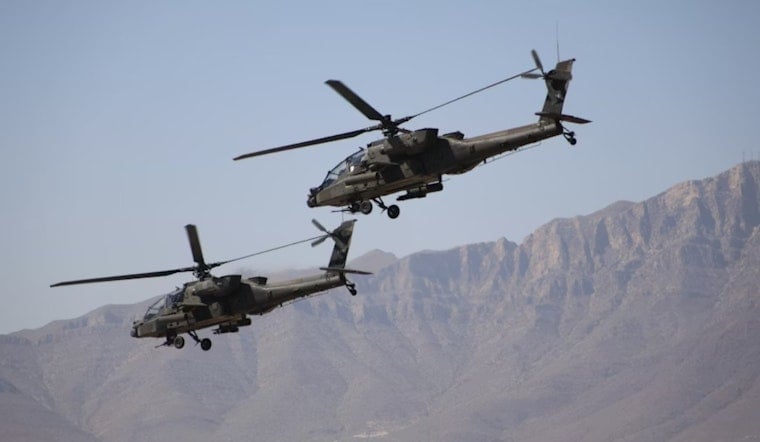
The deployment gave units a rare chance to put new technology through its paces under real-world pressure. Soldiers evaluated mission-command systems, data-fusion tools and artificial-intelligence programs meant to pull together hundreds of sensor feeds into a usable picture. Commanders also leaned into counter-unmanned-aircraft tactics and electronic-warfare routines, folding aerial reconnaissance and transport into everyday operations instead of keeping them as occasional practice drills. Army aviation units cycled through Libby Army Airfield to provide lift and reconnaissance support, according to Army.mil.
Policy Backdrop And New Authorities
The mission played out after the administration declared a national emergency at the southern border in January 2025, a step the White House said opened the door to expanded Defense Department support for border operations. Per the White House fact sheet, the order directed Defense and Homeland Security leaders to deploy forces and provide authorities intended to help regain operational control along the border. News coverage has also highlighted how the State Department’s move to label several transnational criminal groups as foreign terrorist organizations broadened certain legal and intelligence tools available to federal agencies. A fact sheet from The White House outlined the emergency order, while coverage from Reuters detailed the terror designations.
On-The-Ground Results And Cartel Adaptation
Task-force leaders say they judged impact using Border Patrol’s own scorecard: detections, turn-backs, apprehensions and got-aways. By that measure, they reported fewer got-aways and more turn-backs and apprehensions over the first nine months of operations. The AUSA account describes units using the busy, varied border environment to refine combined-arms tactics and stress-test networks of sensors. Cartels did not stand still in response, increasing their own use of drones for reconnaissance and employing small payload drones for smuggling, which pushed JTF–SB to put even more emphasis on counter-drone measures while working alongside CBP’s Air and Marine elements. AUSA reporting and CBP operational descriptions document that partnership.
Transition And What To Watch
On October 10, 2025, U.S. Northern Command formally shifted authority from the 10th Mountain Division to the 101st Airborne Division, a scheduled rotation meant to keep the JTF–SB concept intact rather than start from scratch. The transfer announcement notes that the task force remains built to plug military capabilities into Border Patrol operations along the full 1,954-mile southern border, with the armed forces continuing in a supporting role to civilian law enforcement. U.S. Northern Command provided those details.
Legal Implications
The national-emergency declaration and the State Department’s terror designations have reshaped the toolkit available to federal agencies. The foreign terrorist organization labels bring new sanctions and can influence prosecution options, while the emergency authorities allowed a broader Defense posture in support of the Department of Homeland Security. Observers warn that those moves raise diplomatic and civil-liberties concerns, even as officials point to measurable gains in detection and interdiction. For the official text of the emergency order, see documents from the White House, and for reporting on the foreign terrorist organization designations, see coverage by Reuters.
For communities along the border, from San Diego to El Paso and on across Texas, the operation has meant more uniformed personnel in support roles, new sensors along remote stretches and a continuing argument over how to balance security, civil-liberties concerns and cross-border cooperation. Officials say lessons from JTF–SB will feed into future homeland-defense planning, while critics and community leaders continue to press for clarity about what authorities are in play and how the mission is affecting daily life in border towns.




