

























































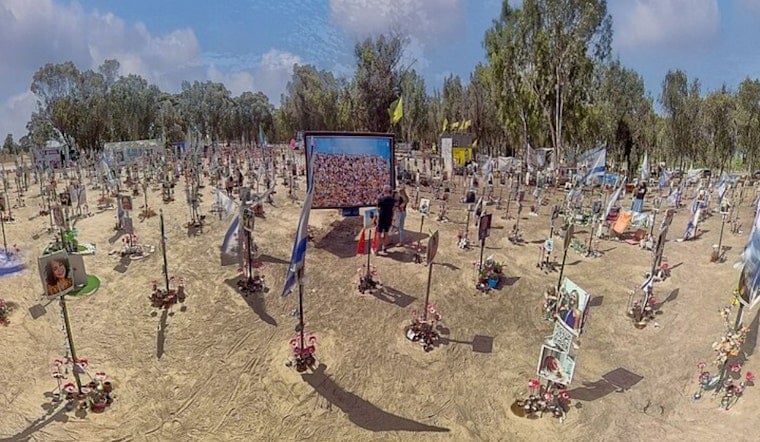
Two survivors of the Oct. 7 Nova music festival attack, Ziv Abud and Eliya Cohen, took the bimah Sunday night at Congregation Chevra Thilim in San Francisco, facing a packed sanctuary as they described how they lived through a roadside shelter where dozens were killed and how Cohen was later taken captive. Their visit drew Bay Area Jews and allies who said they came to listen, remember and bear witness to events that helped ignite a wider conflict and a prolonged campaign to free hostages.
Attendees filled the synagogue as Abud and Cohen walked through their story in detail. Bay Area resident Rebecca Goodman told ABC7 San Francisco she came "to bear witness" so she could later tell others that the attack happened. Rabbi Shlomo Zarchi, who led the program, described the assault on the shelter and told the audience that grenades were thrown into the enclosed space and that "very few people survived in there."
At the Shelter: Grenades and Survival
Survivor accounts say the roadside concrete shelter where Abud and Cohen took cover was overrun when militants arrived and began hurling grenades inside. Abud has described being buried under bodies and later working tirelessly to press for Cohen's return, according to reporting by The Times of Israel. Broader reporting on the Nova festival recounts how only a handful of people made it out of that shelter while several others were killed or taken hostage.
Release, Reunion and Advocacy
ABC7 San Francisco reported that Eliya was taken hostage and held for roughly 505 days before being returned to his family, and that the reunited couple have since been traveling to share their story. The station also reported that the two plan to marry in August and quoted Siena Naaman Cohen of The Chosen Foundation calling their reunion "a miracle."
Why They Came to the Bay Area
Organizers and Jewish community leaders said bringing survivors to the Bay Area helps people who did not witness Oct. 7 grasp the human toll and respond to rising antisemitism, which has driven many local memorials and heightened security measures, according to the San Francisco Chronicle. They described events like the Chevra Thilim program as part of a wider series of gatherings across the region intended to remember victims and support families of hostages.
Attendees said the evening was meant to keep the story alive as the conflict grinds on. The Oct. 7 attack killed roughly 1,200 people and led to the abduction of about 250 hostages, figures reported by the Associated Press, among others. For many in the room, the survivors' testimony, and the couple's decision to marry, felt like a quiet statement of resilience even as the long work of recovery and advocacy continues.





