

























































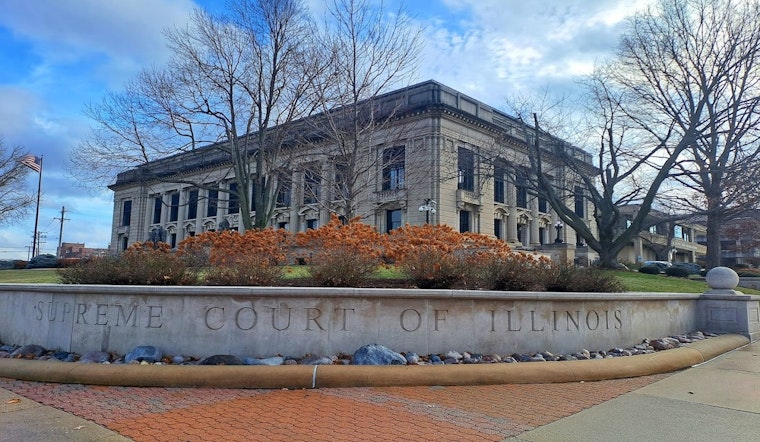
Insurers have notched a major win in the long-running Sterigenics battle over its Willowbrook ethylene-oxide sterilization plant. The Illinois Supreme Court ruled Friday that simply having a state emissions permit does not force insurers to cover pollution-related claims, even when the releases are regulated. The decision settles a closely watched legal question about whether permitted emissions can dodge a standard commercial general liability (CGL) policy's pollution exclusion and now sends the coverage fight back into the federal appeals pipeline.
What the court said
Writing for a unanimous court, Justice Joy Cunningham said a state permit has "no relevance" to whether a pollution exclusion applies. She cautioned that "declining to apply the pollution exclusion simply because the pollution was permitted by the State would undermine the pollution exclusion's very purpose." The Illinois Supreme Court also pointed out that insurers typically sell separate pollution-liability policies rather than rely on standard CGL forms to pick up environmental risks. The ruling, widely covered by regional outlets, effectively tells policyholders that a regulatory green light does not translate into an insurance green light.
Background on the Willowbrook plant
The dispute stems from decades of ethylene oxide (EtO) use at Sterigenics' Willowbrook sterilization facility, which operated under state permits beginning in the 1980s and was ultimately shut by the Illinois EPA over health concerns in 2019. Federal and state reviews in 2018 and 2019 flagged elevated cancer risks for residents living near the plant, and the facility later ceased operations, according to reporting by Capitol News Illinois.
How the litigation unfolded
The Willowbrook exposures triggered hundreds of personal-injury suits, turning the facility into a flashpoint for both tort lawyers and insurers. A Cook County jury awarded Sue (Susan) Kamuda $363 million in the first trial, a headline-grabbing verdict that helped set the tone for the rest of the docket, according to WTTW's coverage of the verdict. Sterigenics' parent company, Sotera Health, later disclosed term sheets in 2025 resolving blocks of Willowbrook claims: approximately $30.9 million for 97 claims in April and $34 million for 129 claims in July, as detailed in Sotera Health's SEC filing.
What the ruling means for insurers and policyholders
Insurance lawyers and industry groups had argued that creating a carve-out for "authorized" or permitted emissions would essentially gut pollution exclusions and turn standard CGL policies into de facto environmental policies. The court sided with that view, preserving insurers' ability to rely on long-standing exclusionary language and reinforcing that industrial pollution risk is supposed to sit with stand-alone environmental products, not routine liability forms. Commentators say the decision cements a sharp line between CGL coverage and specialized pollution policies, a split highlighted in industry analysis reported by Bloomberg Law.
What is next in the coverage fight
The Illinois Supreme Court was answering a certified question from the U.S. Court of Appeals for the Seventh Circuit and has now handed the case back for the federal court to apply its guidance. The next phase will tackle whether National Union had a duty to defend Sterigenics for the particular policy years at issue, using the high court's interpretation of the pollution exclusion as the ground rules. The Seventh Circuit asked for clarification after finding conflicting appellate precedent on whether permitted emissions qualify as "traditional environmental pollution," according to the Seventh Circuit's certification order.
Local and broader consequences
The ruling does not disturb verdicts or settlements already secured by Willowbrook plaintiffs, so the dollars already committed remain on the table. What it does change is how easily policyholders can pass defense and payout costs to their CGL carriers when pollution is involved. Observers say the opinion will likely nudge more industrial operators toward explicit pollution policies and make coverage spats a predictable subplot in large environmental mass torts, rather than an afterthought. Chambers offers additional context on how insurers and policyholders may recalibrate their strategies in light of the decision.



