

























































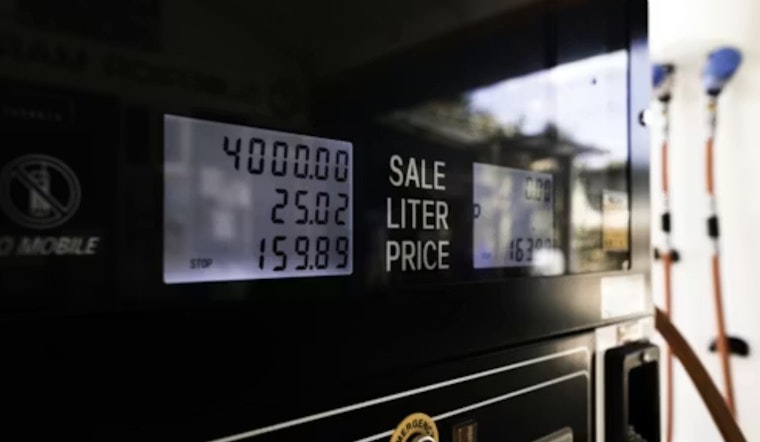
Investors are piling into a proposed Western Gateway pipeline that, if it gets built, would funnel more gasoline, diesel, and jet fuel into California, a move backers say could finally ease some of San Diego's notoriously high pump prices. The proposal is landing at a tense moment: planned refinery shutdowns and a string of outages have tightened regional supplies and pushed the state toward more waterborne imports. For now, though, company promises, regulatory hurdles, and the need for binding shipper commitments all stand between drivers and any real relief, which is still likely years away.
Phillips 66 and Kinder Morgan kicked off a binding open season last fall and say the initial window closed Dec. 19 after drawing strong interest, with a follow-up round planned that targets Los Angeles area markets. In a press release, Phillips 66 described a new build line from Borger, Texas, to Phoenix paired with reversals of existing lines so refined products can move west, and Kinder Morgan says it plans to offer additional capacity in January 2026.
How the pipeline would work
The project would pair that new Texas line with reversals of Kinder Morgan's SFPP East Line and the Phillips 66 Gold Pipeline so fuel can be routed into Arizona and California instead of flowing away from the coast. Reporting by Reuters has outlined how that routing could help offset production lost when refineries shut down or scale back. Shipping data reported by Reuters using Kpler show California imported roughly 279,000 barrels per day in May, with about 187,000 barrels per day coming from South Korea and other Asian exporters, a dependence that pipeline proponents say the system could reduce, as cited by Reuters/Kpler.
What it could mean at the pump in San Diego
California already pays some of the country's highest gas prices, AAA data cited by the San Diego Union-Tribune put the state average around $4.25 per gallon while the national average sat below $3, and San Diegans feel that premium. Analysts told local reporters that more regional pipeline fed inventory can blunt short term spikes by keeping product closer to consumers instead of relying on distant tankers. But pipeline capacity often comes with long term contracts and market tradeoffs, so lower wholesale costs do not automatically translate into immediate savings at every corner station, as per The San Diego Union-Tribune.
Big hurdles remain
"The proposal should put downward pressure on prices at the pump," Kinder Morgan spokesperson Melissa D. Ruiz told the San Diego Union-Tribune, while also noting there are no current plans to build new intra-California pipelines. Even so, the Western Gateway faces a long regulatory and permitting gauntlet, likely legal challenges from environmental groups and the hard economics of financing long pipeline projects. David Hackett, president of Stillwater Associates, told the Union-Tribune that the project needs binding shipper and investor commitments and "won't be built on spec," a reminder that interest alone does not guarantee construction, according to the The San Diego Union-Tribune.
Timeline and what to watch
The companies say they will launch a subsequent open season in January 2026 to market remaining capacity and destinations west of Colton, and industry watchers say the results of that round will be the clearest signal of whether the plan can move ahead. Even with firm shipper commitments, permitting, environmental review and construction would likely take years, so any measurable consumer benefit is not around the corner. State officials have said they are coordinating with refiners and tracking options to protect supplies as refinery exits play out, and that they are monitoring the market, per the Governor's Office.
Bottom line: the Western Gateway could help San Diego and other West Coast markets tap more domestically sourced fuel and lean less on costly imports, but the road from investor interest to lower pump prices runs through years of contracting, permitting and political fighting. Keep an eye on the January open season and on state coordination around refinery transitions for the clearest hints of whether San Diego drivers will eventually see a break at the pump.




