

























































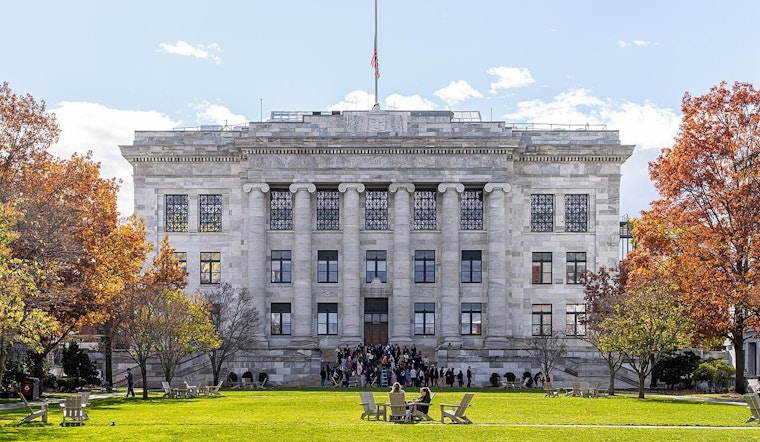
In a resolute push against the Trump Administration's barring of international students, Massachusetts Attorney General Andrea Joy Campbell is at the forefront of a multistate legal endeavor. Comprising 21 attorneys general, this coalition has declared its position through an amicus brief, insisting the United States Court of Appeals for the First Circuit maintain the preliminary injunction that the U.S. District Court for Massachusetts has provided. The injunction under contestation resists President Trump's Proclamation which effectively aims to prevent international scholars from entering the U.S. if they intend to pursue their education at Harvard University, as reported by the Massachusetts government.
"Universities must not be forced to sacrifice their academic independence, and international students should not be punished because their university does not succumb to the whims of the White House," AG Campbell asserted, as noted in the state's official announcement. This spirited defense comes after the Trump Administration abruptly informed Harvard of its SEVP certification revocation. According to the same announcement, the certification withdrawal would not only rob international students at Harvard of their opportunity to complete their education but could also jeopardize their lawful immigration status.
The coalition, led by AG Campbell, highlighted several arguments in the brief. Focused on the broader repercussions, the collective legal minds emphasized the threats posed to states' educational institutions, economic well-being, and standing in the spheres of global academia and scientific innovation. Their brief, sourcing figures from the 2024-2025 academic year, underscored the profound contributions of 631,291 international students, such as the support of more than 200,000 jobs and an economic input approximated at $26.8 billion through direct and ancillary spending.
Articulating the potential outcomes of letting the Trump Administration single out international students, the coalition warned of a forbidding future. They suggested this act could be interpreted as a signal to prospective students and academics worldwide, indicating that their educational and professional trajectories in the United States remain at the mercy of political caprice. "They risk having their studies or career abruptly ended, and could even face detention and deportation, at the whims of the federal government," they emphasized in the amicus brief, shedding light on the serious consequences attached to such administrative conduct, as per the Massachusetts government.
The essence of this united front is an appeal to the court, seeking affirmation of the District Court's preparatory injunction halting the Trump Administration's unlawful execution while litigation continues. The robust coalition, inclusive of Attorney Generals from across the U.S. such as Arizona, California, and New York among others, represents a potent challenge to the proclamation, expressing a call to protect the integrity of academic freedom and international cooperation.





.jpg)