

























































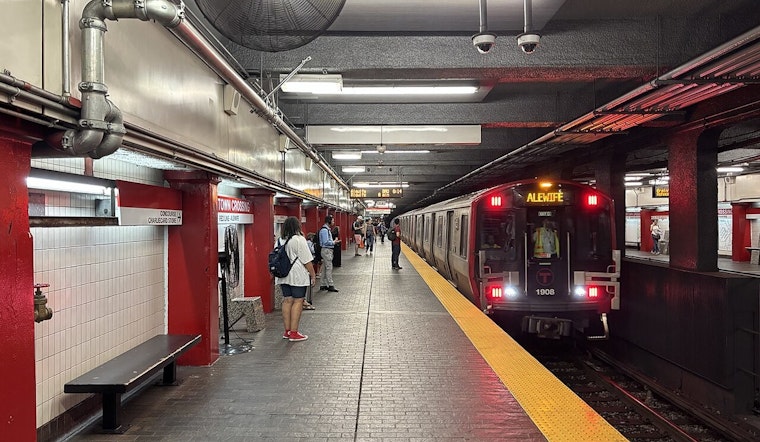
The MBTA has had a busy year in 2025, focusing on critical infrastructure improvements across both the subway and Commuter Rail systems. In a public release, MBTA's Interim MassDOT Secretary and MBTA General Manager Phillip Eng highlighted the agency's accomplishments, which included tackling years of deferred investment to enhance safety, reliability, and overall rider experience.
Eng attributed the progress to the collective efforts and support from the Healey-Driscoll Administration and the Legislature, stating, "When riders share their feedback, it is invaluable and I want to thank them for their continued support of the essential work being performed to rebuild our transit system." Details on the MBTA's website reveal how the agency has made strides in restoring higher speed limits on certain rail lines and advanced signaling upgrades that had seen little progress until recently.
Innovation in service alternatives was key to reducing disruptions for riders during construction periods. Instead of resorting to shuttle buses, the MBTA utilized strategies such as shuttle trains and single-track operations to keep commuters moving. As per a statement obtained by the MBTA, single tracking saved the organization over $3 million compared to shuttle bus usage.
One of the crucial developments was the persistent focus on signal modernization on the Red and Orange lines, which is expected to be completed in 2026. This upgrade promises improved reliability and shorter wait times for passengers. Similarly, the Green Line Train Protection System received significant work this past year, a safety measure intended to prevent train-on-train collisions.
The MBTA also didn't shy away from complex projects. It tackled intricate track areas like the Blue Line's Bowdoin loop and the Red Line's Codman Yard facilities, enhancing the MBTA's operational capabilities. Impressively, crews maximized service outages by concurrently performing additional work, such as station improvements and structural repairs, which otherwise would require separate suspensions.
Not just sticking to the subway, the MBTA made noteworthy investments in the Commuter Rail network as well, from opening new stations like North Wilmington to kicking off service in long-awaited regions through the South Coast Rail project, broadening connectivity across Massachusetts. "Security enhancements at the new station include modernized surveillance cameras and improved lighting to ensure a safer station environment," according to the MBTA's report.
Looking ahead, the MBTA has outlined its agenda for continued infrastructure progress, ensuring the public that the transportation system will not only support current demand but also lay the groundwork for a reliable service for future generations.





,_July_2025.jpg)