

























































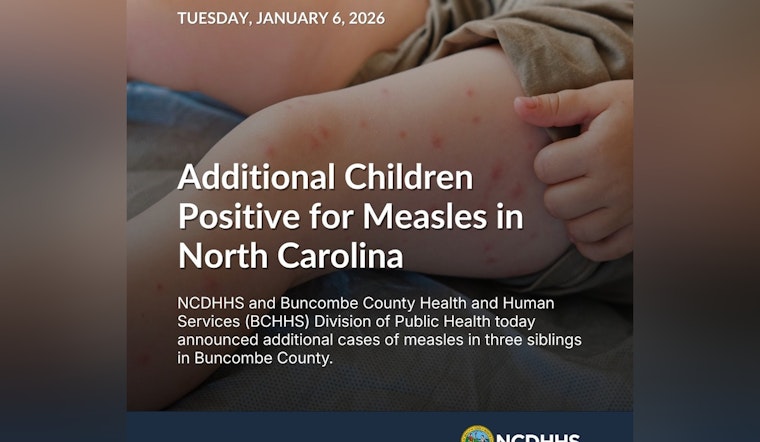
The NC Department of Health and Human Services has sounded the alarm on a measles outbreak in Buncombe County and western North Carolina. In a recent social media update, the state's health department reported additional measles cases among children who were exposed to the virus while traveling to an area already grappling with an active outbreak. The message contained a critical alert for anyone who might have been in the emergency department waiting room at Mission Hospital on the early morning of January 4, or those who are uncertain about their measles immunity status. The health body has laid out clear symptoms to watch for and necessary steps to contain the viral spread.
According to the details posted on the NCDHHS's official Facebook page, individuals potentially exposed need to be highly vigilant for measles indications. These include fever, runny nose, cough, red eyes, and a distinctive red rash that typically starts at the hairline and spreads downward to the rest of the body. NCDHHS urges immediate contact with a healthcare provider if any of these symptoms start to develop, but they also plead with individuals to not just directly visit a clinic or hospital in order to prevent further infection spread.
Measles, while once declared eliminated in the United States in 2000, has seen a worrisome resurgence in recent years. This highly contagious virus can spread through coughing and sneezing, and sadly, it often affects unvaccinated children the hardest. The NCDHHS has emphasized the effectiveness of the measles-mumps-rubella (MMR) vaccine as a preventive measure, urging those not vaccinated to consider getting the vaccine, given the present circumstances.
The department's update serves as a sobering reminder of the importance of maintaining vigilance against vaccine-preventable diseases. "If you visited Mission Hospital’s emergency department waiting room early on January 4, or if you are unsure of your measles immunity, it’s important to know what symptoms to watch for and what actions to take to help prevent further spread," the NCDHHS statement read.



